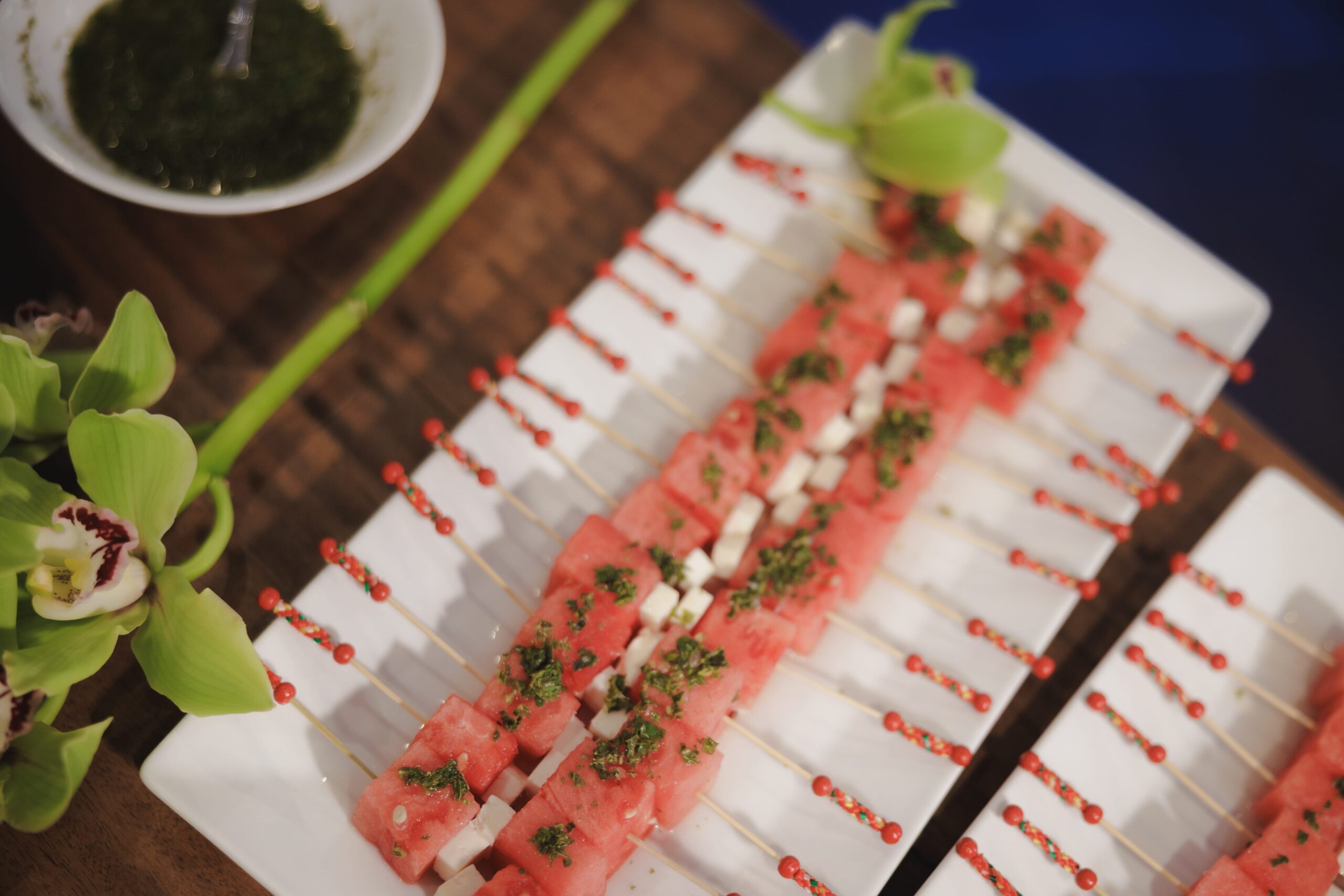
A menu tasting is often the moment an event starts to feel real: the first taste of a passed hors d’oeuvre, the balance of a signature entrée, the presentation that sets the tone for the evening. So, what is a tasting fee? In catering, it is a charge for a dedicated pre-event appointment where clients sample selected dishes and refine the culinary direction for their celebration.
Rather than simply serving a meal, a thoughtfully planned tasting gives a chef and client the opportunity to align flavor, presentation, pacing, and guest needs before the event date. For weddings, milestone celebrations, and executive gatherings, that clarity is part of creating an occasion that feels considered from the first course to the final toast.
What Is a Tasting Fee in Catering?
A tasting fee is typically charged per person, per couple, or per tasting appointment. It reflects the work required to plan, source, prepare, plate, and serve a curated selection of menu items before a client has finalized an event contract.
The fee is not a universal amount, and neither is the format. A more intimate consultation may include a few representative selections, while an elaborate tasting for a large destination wedding might present several hors d’oeuvres, salads, entrées, sides, desserts, and beverage pairings. The scope should reflect both the event vision and the stage of planning.
In other hospitality settings, the phrase can mean something different. A winery may charge a fee to sample wines, while a restaurant may offer a chef’s tasting menu at a set price. In the event-catering context, however, the tasting fee supports a private planning experience designed around a future celebration.
What a Catered Tasting Fee May Cover
A professional tasting involves considerably more than the ingredients on the plate. Before guests arrive, the culinary team reviews the event style, proposed guest count, venue conditions, dietary considerations, service format, and preferred flavors. That preparation makes the appointment a meaningful preview rather than a collection of disconnected samples.
Depending on the caterer and package, a tasting fee may help cover menu planning, premium ingredients, kitchen labor, customized preparation, plating, service staff, and the consultation itself. If the event calls for seasonal seafood, specialty cuts, imported ingredients, or highly detailed presentation, those choices can affect the tasting investment just as they affect the final event menu.
For a plated wedding dinner, the tasting may be especially valuable because temperature, portioning, sauce selection, and visual composition all matter. For food stations or a cocktail-forward reception, the focus may shift to variety, guest flow, and the experience of enjoying each item while standing and socializing. Neither format is inherently better. The right tasting should answer the questions most relevant to the way guests will be served.
Is the Tasting Fee Applied to the Event Cost?
Sometimes. Many premium caterers offer to credit all or part of the tasting fee toward the final event balance after a contract is signed or a minimum event spend is met. Others treat it as a separate consultation expense. Both approaches can be reasonable, provided the policy is clear before the appointment is booked.
A credited fee can be a welcome benefit for clients who have already identified a strong culinary partner and are ready to move forward. A separate fee may be appropriate when the tasting is highly customized, when multiple menu rounds are requested, or when the event remains in an early exploratory stage. It recognizes the chef’s time, creative work, and the real cost of preparing an elevated experience.
Ask directly whether the fee is refundable, transferable, or creditable, and when any credit expires. Also ask whether taxes, service charges, beverages, or additional guests are included. A transparent conversation at the beginning prevents surprises and allows the planning process to remain focused on the celebration itself.
Why a Tasting Is Worth Planning Carefully
The purpose of a tasting is not to order every dish you might like. It is to make informed choices that will translate beautifully at scale. A dish that feels rich and memorable in a small sample may need a brighter accompaniment for a warm outdoor reception in Puerto Rico. A favorite entrée may pair differently with a formal plated service than with an energetic dinner-and-dancing schedule.
This is also the right time to discuss the details guests may never see but will certainly feel: how quickly courses will be served, how vegetarian and allergy-aware meals will be presented, whether passed bites suit the cocktail hour, and how local ingredients can bring a sense of place to a destination celebration. A strong catering team will listen for the atmosphere clients want to create, not just the items they want to eat.
Chef Marisoll Events approaches menu design as part of the event’s larger hospitality story, pairing refined presentation with flavors that honor Puerto Rico’s culinary character. The goal is not to impress for a single bite. It is to create a meal guests remember as an integral part of the occasion.
Come Prepared, but Leave Room for Expertise
Bring a clear sense of priorities to the tasting. Share the expected guest count, venue, event timeline, desired service style, budget range, and any dietary restrictions already known. Reference images or describe the mood you hope to create: formal and candlelit, tropical and celebratory, modern and understated, or warm and family-centered.
At the same time, allow the chef to guide the final balance. Some selections are ideal for a sample but less suited to holding, transporting, or serving hundreds of guests at once. Experienced caterers understand how a menu performs under real event conditions. Their recommendations protect both the food and the guest experience.
Know Who Should Attend
For most weddings and private events, two to four decision-makers is an ideal tasting group. The couple or hosts should be present, along with a planner or one trusted family member if their input is essential. A larger group can make decisions harder, particularly when individual preferences begin to compete with the event’s overall vision.
If more guests need to participate, ask whether the caterer permits additional attendees and whether an added per-person fee applies. This is common because each additional guest affects preparation and service. It is best to confirm that detail when scheduling, rather than assuming a tasting is open to the full planning party.
Questions to Ask Before Paying a Tasting Fee
A brief conversation before booking can establish exactly what to expect. Ask how many dishes will be presented, whether the menu is customized or selected from a standard tasting offering, and whether beverages are included. Confirm the number of attendees allowed, the appointment length, and the policy for rescheduling.
It is also helpful to ask how feedback will be handled after the tasting. Can sauces be adjusted? Can an entrée be paired with a different side? Will dietary accommodations be sampled or simply planned for the final event? The answers reveal whether the experience is designed as a true collaboration.
Most importantly, ask how the tasting fee relates to the final proposal. A polished caterer should be able to explain the investment clearly and outline the next planning steps without pressure. Luxury hospitality should feel attentive and organized, never vague.
The Value Behind the Fee
A tasting fee is not merely the price of a few plates. It is an investment in confidence. It gives clients a chance to experience a caterer’s standards firsthand, make decisions with intention, and move toward the event day knowing the menu reflects their guests, setting, and style.
When the appointment is approached as a collaborative part of planning, the value extends far beyond the table. The right tasting brings a vision into focus, turning a beautiful menu proposal into a celebration guests can truly anticipate.