The rehearsal dinner is often the first moment your wedding feels truly underway. Knowing how to host a rehearsal dinner is less about following a rigid set of rules than creating an evening that gives the people closest to you a warm welcome, a beautiful meal, and room to connect before the ceremony.
For destination weddings in Puerto Rico, that welcome carries even more meaning. Your guests may have traveled far, arrived at different times, or be meeting one another for the first time. A thoughtful rehearsal dinner sets the emotional tone: relaxed but polished, personal without becoming overprogrammed, and memorable in its own right.
Start With the Feeling You Want Guests to Carry Forward
Before choosing a restaurant, venue, or menu, decide what you want the evening to feel like. An intimate family supper calls for a different setting than a lively welcome party for 80 guests. Neither approach is more correct. The right choice is the one that reflects your relationship, your wedding weekend, and the comfort of the people gathered around you.
Consider whether you want a seated dinner with toasts, a cocktail-forward reception with food stations, or a more relaxed gathering that moves from sunset drinks into dinner. A formal plated meal offers natural structure and creates space for meaningful remarks. Stations and passed hors d’oeuvres encourage mingling, which can be especially valuable when two families are still getting acquainted.
The rehearsal dinner should complement rather than compete with the wedding. If the wedding is a grand black-tie celebration, the night before might feel especially inviting as a refined garden dinner or a vibrant Puerto Rican-inspired evening. If the wedding itself is intentionally understated, the rehearsal dinner can still be elevated through exceptional food, beautiful service, and considered details.
How to Host a Rehearsal Dinner With the Right Guest List
Traditionally, the rehearsal dinner includes immediate family, the wedding party and their partners, officiant, and anyone participating in the ceremony. For a destination celebration, however, the guest list often expands. Inviting all traveling guests to a welcome dinner or post-dinner reception can be a gracious gesture, particularly when many have made a significant journey to celebrate with you.
There is no obligation to host every wedding guest for a full meal. Budget, venue capacity, and the kind of experience you want to create should guide the decision. One elegant option is to host an intimate seated dinner for the wedding party and family, then invite the wider guest list to join for dessert, cocktails, coffee, or a late-evening gathering.
Communicate the plan clearly. Guests should know whether they are invited to dinner, a welcome reception, or both, along with the expected dress code and transportation details. Clear expectations are an expression of hospitality, especially for visitors navigating an unfamiliar destination.
Choose a Venue That Does Some of the Storytelling
A rehearsal dinner venue should feel distinct, comfortable, and appropriate for conversation. A private room at a favorite restaurant may suit a small group beautifully, while an art-filled hall, historic courtyard, oceanfront terrace, or private estate can give a larger gathering a sense of occasion.
In Puerto Rico, the setting can become part of the welcome. Think of the gentle transition from daylight to evening, the sound of live music in the distance, the color and texture of local design, and cuisine that honors the island without becoming a theme. A private hall at the Puerto Rico Museum of Art, for example, offers a setting where culture, architecture, and celebration meet with quiet sophistication.
Practical details matter as much as atmosphere. Confirm whether the space allows speeches, accommodates guests with mobility needs, has a weather contingency, and offers enough room for the service format you envision. A gorgeous terrace is less appealing if guests are crowded around a bar or unable to hear a parent giving a toast.
Let the Menu Welcome Everyone to the Table
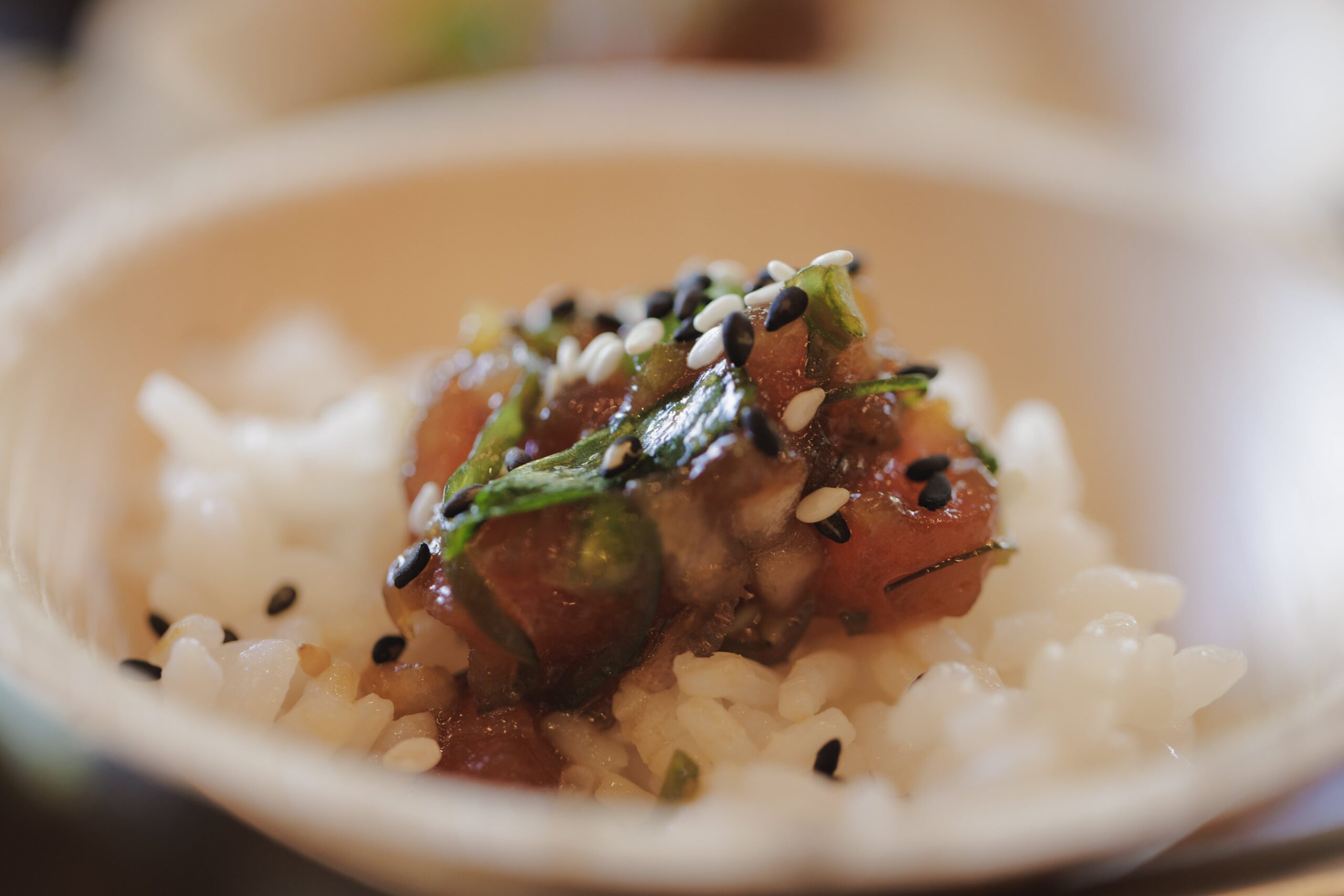
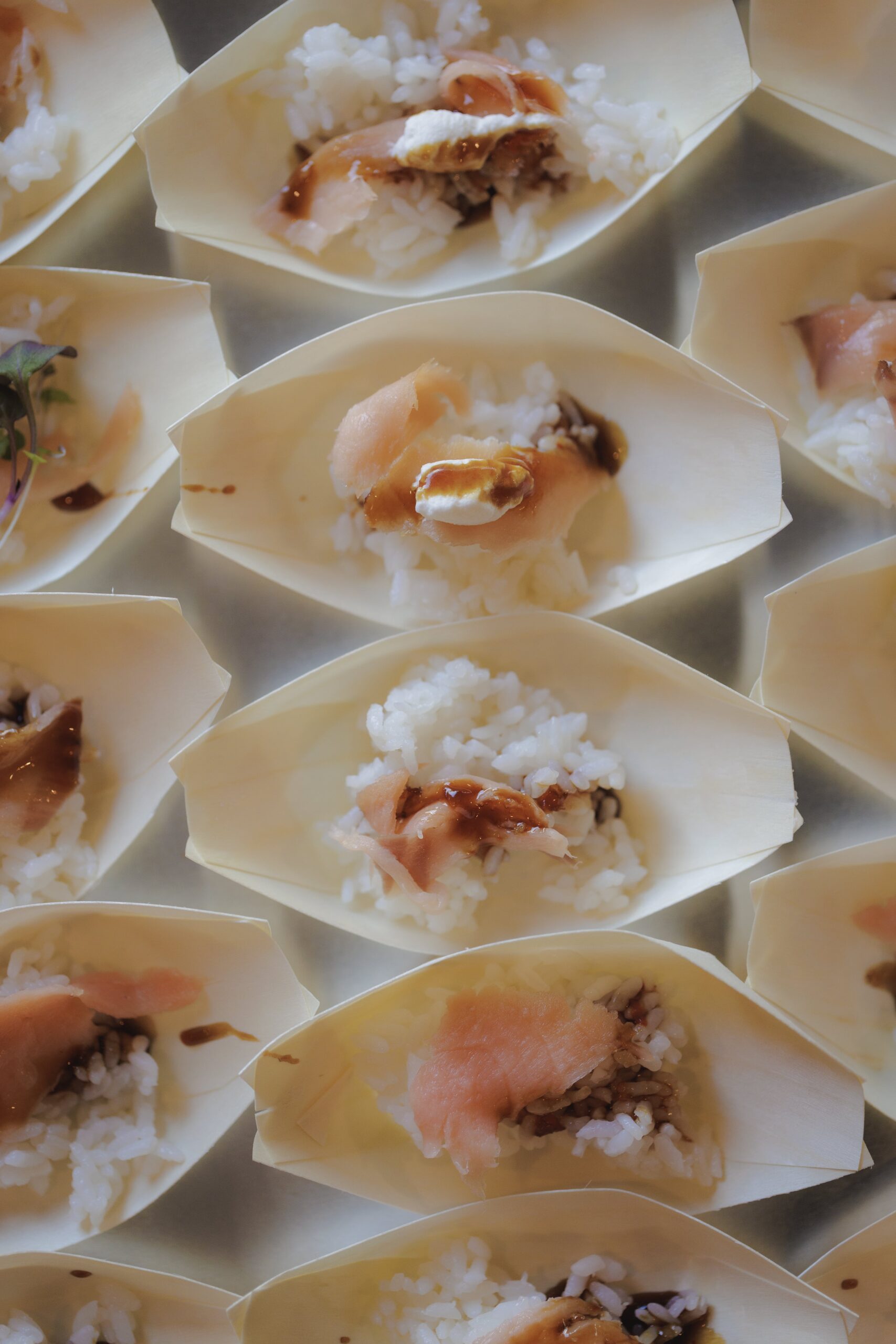
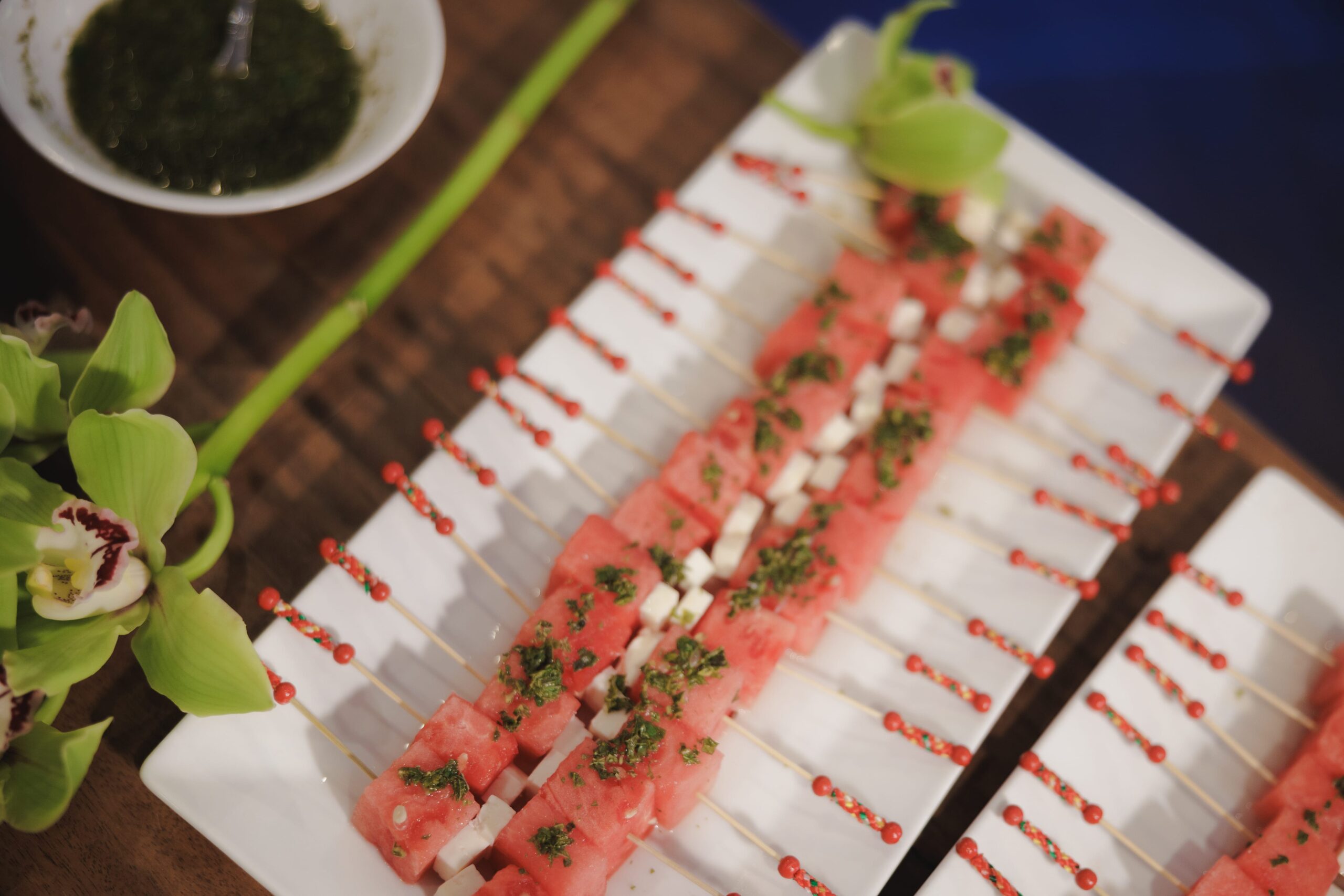
The meal is the center of the evening, but it does not need to be overly elaborate to feel extraordinary. The most successful rehearsal dinner menus have a point of view. They may celebrate regional ingredients, tell part of the couple’s story, or simply offer the foods guests will be delighted to share.
A chef-led menu can weave Puerto Rican influence into an elevated dining experience with restraint and imagination. Local seafood, seasonal tropical fruit, plantains, artisan cheeses, and thoughtfully prepared meats can appear in a way that feels polished rather than predictable. The goal is not to offer every regional classic in one meal. It is to create a menu with balance, generosity, and a sense of place.
Think about pacing when selecting the format. A plated dinner creates an elegant rhythm and works well for a smaller party with planned remarks. Family-style service feels abundant and welcoming, encouraging guests to pass dishes and begin conversations. Stations offer variety and ease for a larger welcome event, but they require careful layout so guests do not spend the evening waiting in lines.
Dietary needs deserve the same consideration as every other guest experience. Ask for preferences early and work with your culinary team to ensure vegetarian, vegan, gluten-free, allergy-conscious, and children’s meals are presented with the same care as the main menu. No guest should feel like an afterthought at your table.
Build a Gentle Rhythm for the Evening
A rehearsal dinner needs a beginning, middle, and end, but it should never feel like a production. Allow guests time to arrive, take a drink, and greet one another before dinner begins. If the wedding rehearsal takes place immediately beforehand, build in a short reset so everyone can freshen up and transition into the evening.
Keep toasts intentional. A few meaningful remarks from parents, siblings, or the couple are often more powerful than an open invitation for every guest to speak. Let those offering toasts know the timing in advance, and consider placing them after the first course or just before dessert, when guests are settled and attentive.
Music should support the room, not overtake it. A guitarist, small acoustic ensemble, or carefully chosen playlist can add warmth without making conversation difficult. If your group is energetic and you want the night to continue, a later cocktail hour or a nearby gathering lets guests celebrate without making the formal dinner feel rushed.
Add Details That Feel Personal, Not Overdone
The most lasting details are often the ones that reveal something true about the couple. A signature cocktail inspired by where you met, place cards with a handwritten note, a favorite family dessert, or a short welcome message can create intimacy without adding unnecessary décor or expense.
For destination guests, a small sense of orientation is especially thoughtful. Mention the next day’s timeline, share transportation instructions, and make sure guests know whom to contact if they need assistance. These details allow everyone to relax and enjoy the weekend rather than search for answers.
Avoid trying to fit every wedding tradition into one evening. You do not need a full décor installation, multiple outfit changes, games, formal entertainment, and a five-course meal for the night to feel special. Thoughtful editing is part of refined hosting. Give guests enough to enjoy, then leave them looking forward to the wedding day.
Work With Professionals Who Can Hold the Details
The most relaxed hosts are usually the ones who do not have to manage service, timing, rentals, or last-minute menu adjustments themselves. A trusted event partner can shape the experience around your guest count, location, style, and wedding schedule while keeping the evening gracious from the first welcome drink through the final farewell.
Chef Marisoll Events approaches rehearsal dinners as an opening chapter, crafting personalized menus and attentive service that allow couples to be present with the people they love. That presence is ultimately the greatest luxury you can offer your guests.
When the last glass is raised, let the evening end with gratitude rather than exhaustion. A rehearsal dinner hosted with care does not need to say everything about your wedding. It simply needs to make your guests feel that they have arrived somewhere meaningful, and that they are about to share in something beautiful.