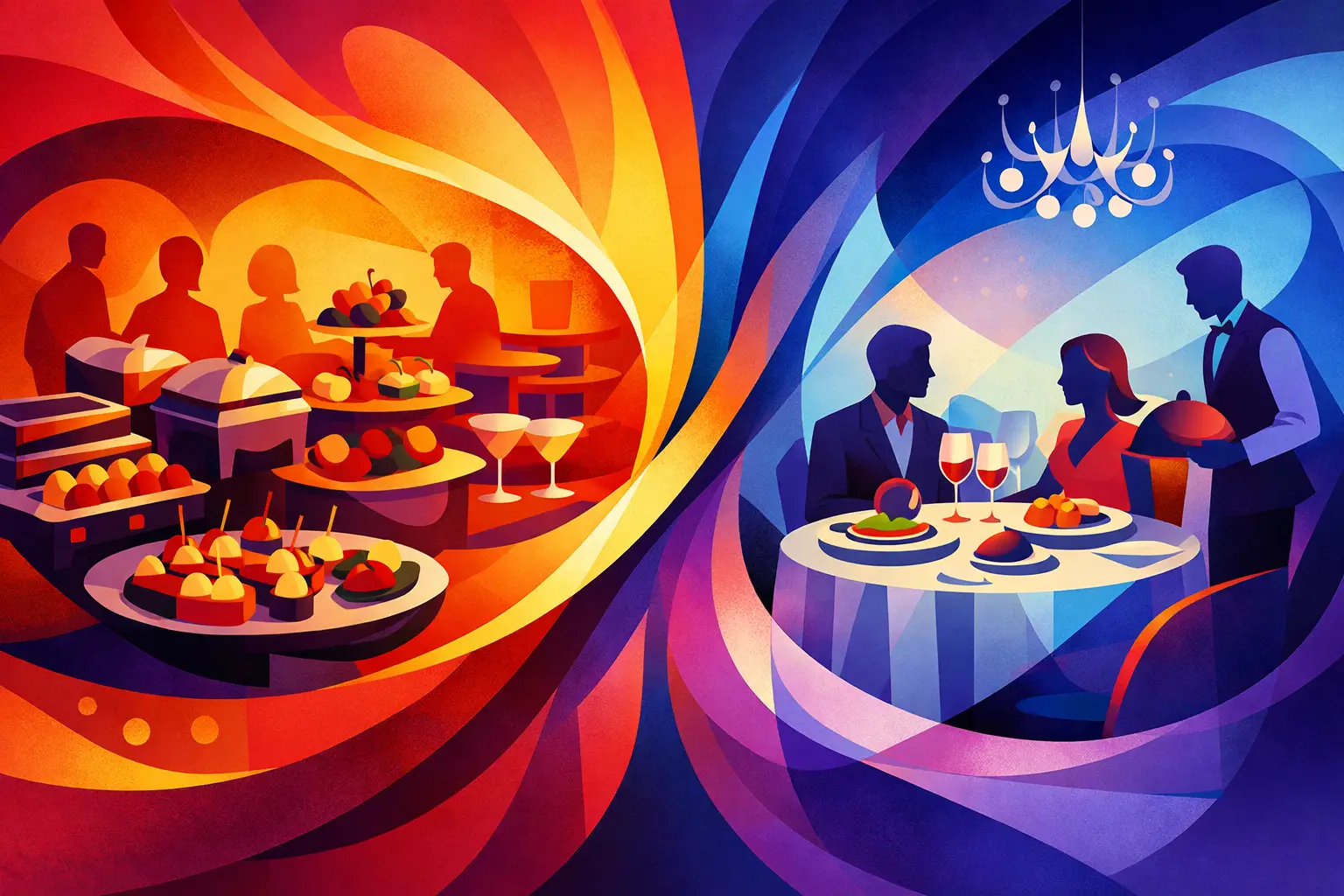
The moment dinner begins sets the emotional rhythm of a celebration. When considering food stations vs seated dinner reception, the best choice is not simply about how guests receive their meal. It is about the atmosphere you want to create: a formal evening of considered courses and attentive service, or a more social culinary experience where guests move, mingle, and discover each dish at their own pace.
For a destination wedding in Puerto Rico, an executive gathering, or a private milestone celebration, both formats can feel beautifully elevated. The distinction lies in how each one supports your guest list, venue, timeline, menu vision, and the kind of hospitality you want guests to remember.
Food Stations vs Seated Dinner Reception: The Essential Difference
A seated dinner reception is structured around the table. Guests are welcomed to their assigned seats and served a plated, multi-course meal by a professional service team. The experience unfolds in a carefully paced sequence, creating a sense of occasion and allowing every plate to arrive with refined presentation.
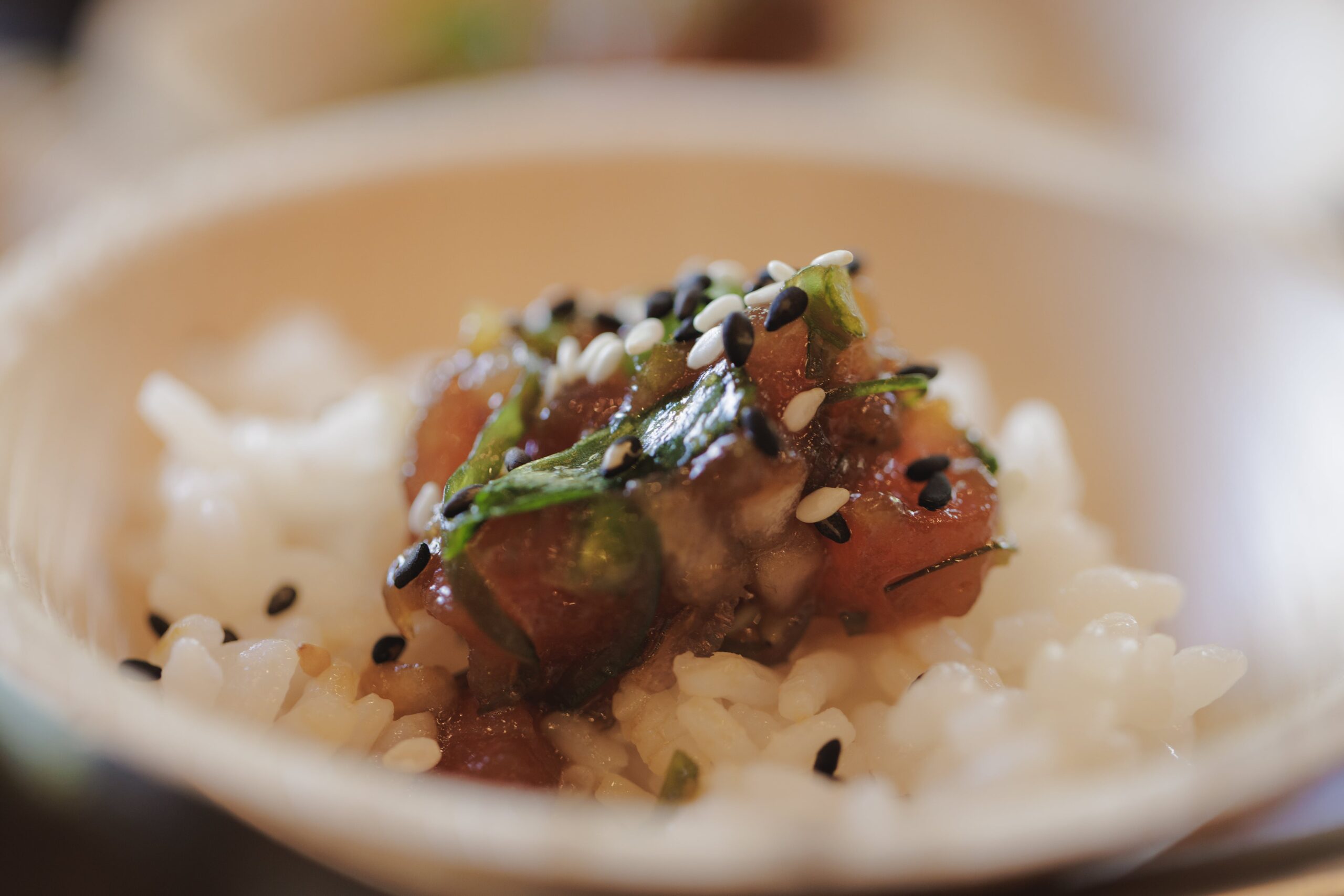
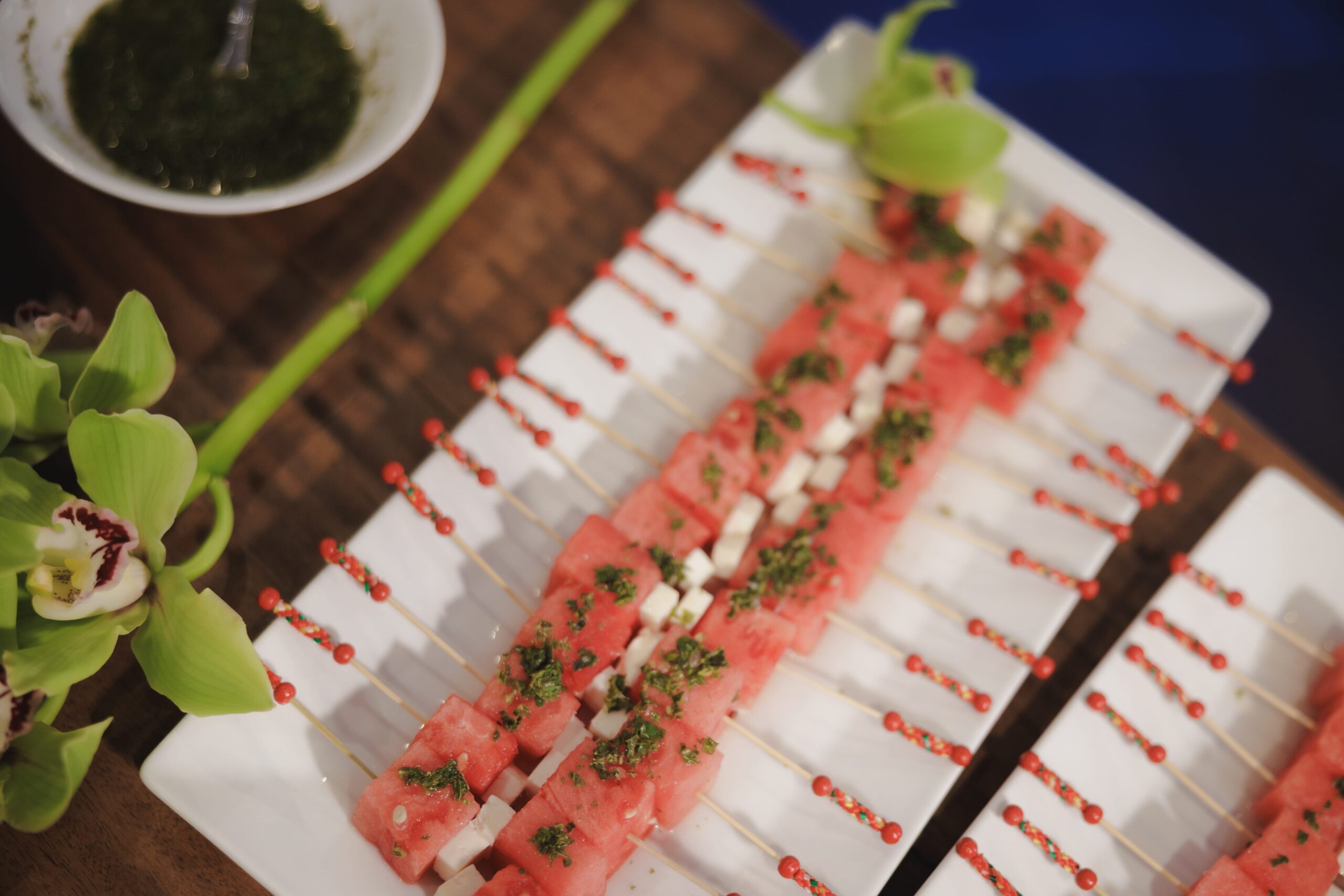
Food stations invite a more fluid style of dining. Rather than receiving one plated entrée, guests visit chef-curated displays throughout the room. A station may celebrate a particular cuisine, ingredient, or preparation – perhaps a seafood and ceviche presentation, a carved entrée, artisanal pasta prepared to order, or Puerto Rican-inspired specialties reimagined with contemporary elegance.
Neither format is inherently more luxurious. Luxury comes from intentional menu design, beautiful presentation, generous service, and the confidence that every detail has been considered. The question is which experience best reflects your gathering.
When a Seated Dinner Creates the Right Mood
A plated dinner is often the natural choice for couples and hosts who envision a formal, gracious reception. It gives the evening a clear structure, which is especially helpful when there are speeches, formal toasts, entertainment, or meaningful cultural moments that deserve everyone’s attention.
There is a quiet sophistication in welcoming guests to a dressed table, pouring wine, and presenting a composed first course. Each course becomes part of the evening’s choreography. Guests are settled, comfortable, and able to enjoy conversation without deciding when to leave the table or where to dine next.
This format is particularly well suited to intimate weddings, black-tie celebrations, gala dinners, and executive events where the host wants a polished, unified experience. It also works beautifully in venues where architectural details, tablescapes, and floral design are central to the event’s visual story. At a setting such as the private hall at the Puerto Rico Museum of Art, a plated dinner can complement the room’s artistry with an equally thoughtful culinary presentation.
A seated meal does require a more precise level of planning. Hosts typically select a limited number of entrée choices in advance, and guest dietary needs must be collected carefully. The service timeline also needs to account for the size of the room, the number of courses, and the timing of the program. For some events, this structure is exactly what makes the evening feel effortless and distinguished.
The strengths of a plated reception
The greatest advantage of seated service is focus. Everyone shares the meal at the same time, which supports a more formal program and creates a sense of collective celebration. It can also be easier for older guests or those with mobility concerns, since their dining experience comes directly to the table.
Plated service gives the chef and service team exceptional control over presentation, temperature, and timing. For a menu built around delicate fish, a precise sauce, or a composed dessert, that control matters. It allows the culinary experience to feel personal, elegant, and intentionally paced from beginning to end.
When Food Stations Bring the Celebration to Life
Food stations are ideal when the goal is movement, conversation, and variety. They encourage guests to explore the room and interact beyond their assigned tables, creating an atmosphere that feels energetic without sacrificing sophistication.
For destination celebrations, stations can be a particularly meaningful way to introduce guests to Puerto Rico through food. Instead of limiting the menu to one entrée selection, hosts can offer a broader culinary narrative: island ingredients, local flavors, global influences, and live finishing touches that make the dining experience feel immediate and memorable.
Stations also offer generous flexibility. Guests with different appetites and preferences can shape their own plates, while vegetarian, gluten-conscious, and other dietary options can be incorporated naturally into the overall presentation. This can feel more welcoming than asking guests to select from only two or three entrées weeks before the event.
The format is especially effective for cocktail-forward weddings, milestone birthdays, brand celebrations, and corporate receptions where networking is a priority. If guests are meeting for the first time, celebrating across different friend groups, or connecting with colleagues, stations give them a reason to circulate and begin conversations.
The details that make stations feel elevated
The difference between a casual buffet and an exceptional station reception is design. Stations should be placed with intention so guests can move comfortably through the room without long lines or congestion. Each display needs visual character, with height, texture, signage, and service that feel consistent with the event’s overall aesthetic.
Live chef-attended stations add an especially memorable dimension. Watching a dish be finished to order creates a sense of theater while ensuring guests receive food at its best. A skilled culinary team can also guide guests through choices, describe ingredients, and make each interaction feel warm and personal.
For a larger celebration, multiple stations should offer distinct experiences rather than variations of the same meal. This keeps guest flow balanced and gives the menu a sense of discovery. A well-designed station dinner is not less formal than a plated meal. It is simply more dynamic.
Consider Your Guests Before Choosing a Format
The most beautiful menu is one that makes guests feel cared for. Before deciding, think about who will be in the room and how they are likely to enjoy the evening.
If your guests include many older relatives, young children, or people who may appreciate remaining seated, a plated dinner may provide greater comfort. It can also be the stronger choice for a group that values lingering conversation at the table over dancing or mingling between courses.
If your guest list is diverse, social, and eager to experience Puerto Rican cuisine in several expressions, stations may create more excitement. They are also useful when a group includes a broad range of food preferences. The key is not simply offering more choices; it is presenting those choices with enough abundance and organization that every guest feels considered.
Guest count matters as well. A smaller dinner may feel wonderfully intimate when plated, while a larger group can benefit from stations that prevent the evening from becoming overly long. Yet large events can also be served successfully at tables with the right staffing and a well-planned service schedule. This is where experienced event guidance becomes invaluable.
Let the Event Timeline Guide the Menu
Your dinner format affects nearly every part of the reception schedule. A seated dinner usually asks guests to pause the celebration for a defined period, often allowing ninety minutes or more for multiple courses, speeches, and service. This can create a lovely sense of ceremony, but it should be planned around the energy of the evening.
Stations allow guests to dine more flexibly, often making room for dancing, conversation, and entertainment to continue around the meal. They can be particularly effective when the reception begins later, when guests have already enjoyed cocktail hour, or when the event has a lively, open-ended feel.
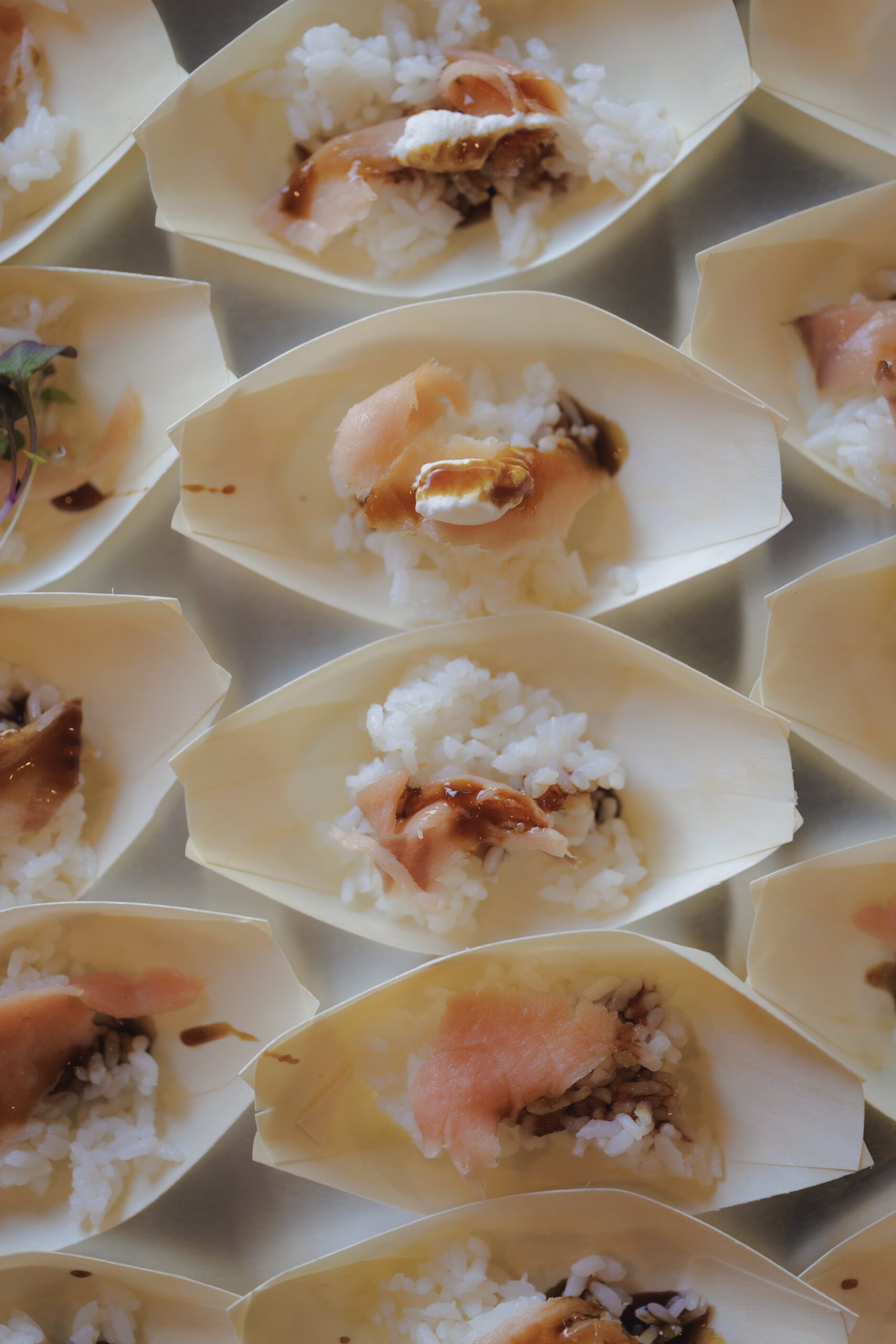
A hybrid approach can offer the best of both worlds. Consider beginning with passed hors d’oeuvres and a chef-attended station during cocktail hour, followed by a seated entrée. Or serve an elegant plated first course before opening thoughtfully designed main-course stations. This approach preserves ceremony while adding variety and movement.
Budget, Service, and the Value of Intention
It is easy to assume that one format is always more expensive than the other, but the reality depends on the menu, staffing, rentals, guest count, and level of customization. A plated meal may require more coordinated table service, while stations can require additional culinary teams, display elements, and food production to maintain variety and abundance.
The most worthwhile investment is not necessarily the format with the most courses or the most options. It is the one that feels true to your event. An intimate plated dinner with exceptional wine pairings may be more meaningful than a sprawling menu, while a lively station reception may be the perfect expression of a couple or company that wants every guest to connect.
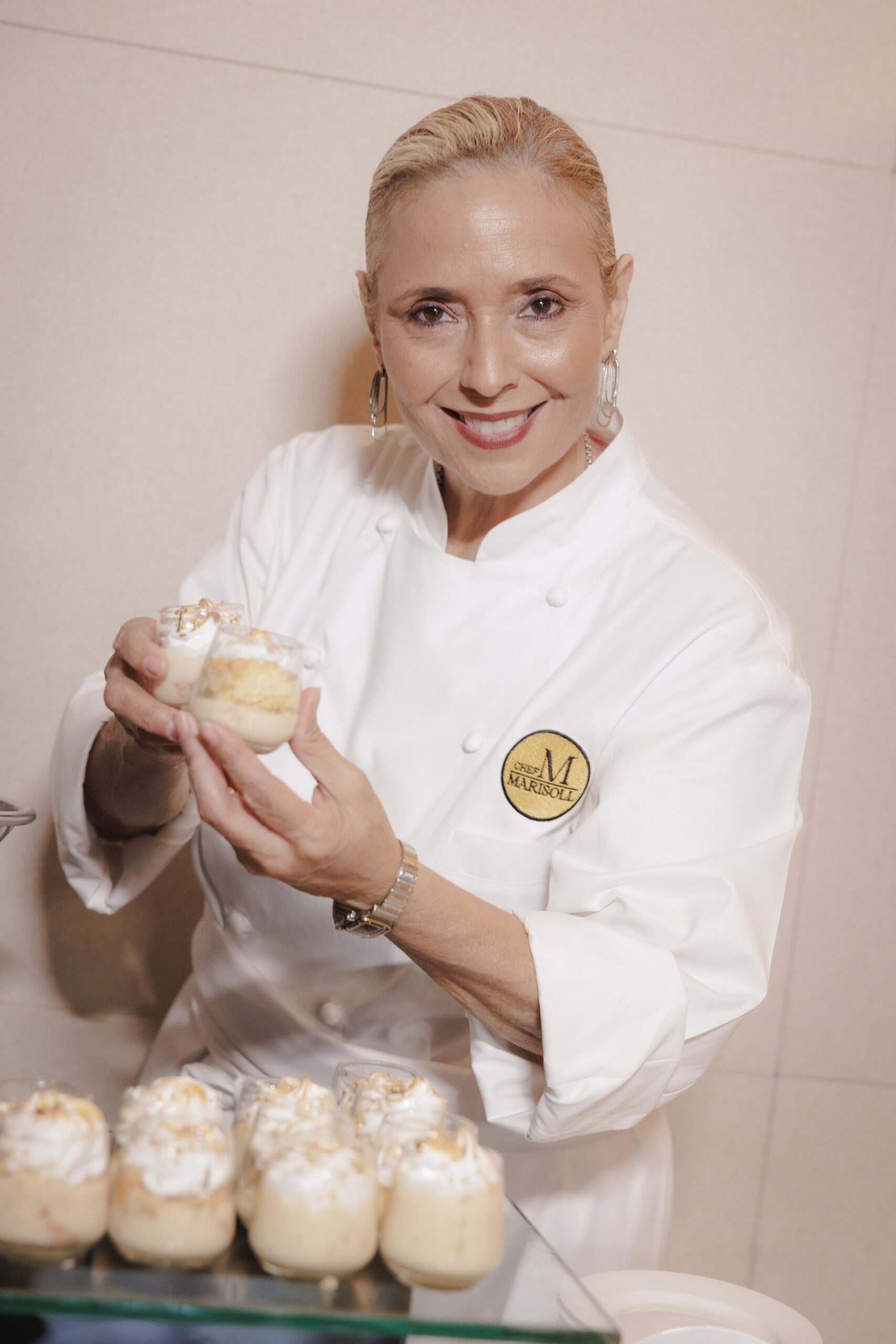
At Chef Marisoll Events, menu planning begins with that larger vision: how you want the room to feel, what you want guests to experience, and which flavors will make the occasion unmistakably yours. From there, service style becomes a creative decision rather than a logistical compromise.
The right dinner format should leave guests with more than a full plate. It should give them a reason to pause, connect, celebrate, and carry the warmth of your gathering with them long after the final course is served.