A remarkable event is often remembered in small, sensory details: the first chilled cocktail offered at exactly the right moment, the glow of a beautifully set table, the aroma that welcomes guests into the room. High end event catering brings those details together with intention. It is not simply excellent food served in an attractive setting. It is a carefully considered expression of the occasion, the host, and the people gathered to celebrate.
For a destination wedding in Puerto Rico, an executive reception, or an intimate milestone dinner, the dining experience carries emotional weight. Guests may forget the order of the evening, but they remember how warmly they were received, how thoughtfully they were cared for, and how the meal made the celebration feel.
High End Event Catering Begins With a Point of View
Luxury is not defined by a single ingredient or a dramatic presentation alone. It begins with clarity. A menu should feel as though it could belong only to that event, in that setting, for those particular guests. The most compelling culinary experiences have a point of view, whether that means honoring Puerto Rican flavors with contemporary elegance, creating a refined black-tie dinner, or designing a relaxed coastal gathering with exceptional polish.
This is why personalization matters before the first menu is written. A couple may want their wedding dinner to reflect the places they have traveled together. A company hosting visiting executives may need a reception that feels distinctly Puerto Rican without asking guests to navigate unfamiliar choices. A family celebrating a landmark birthday may value favorite dishes presented with a more elevated touch.
The chef and service team should listen for more than dietary requirements and guest counts. They should understand the rhythm of the event, the atmosphere the host wants to create, and the impression guests should take with them. Those conversations turn catering into hospitality with purpose.
A Crafted Menu Must Serve the Moment
A menu can be inventive and still feel welcoming. In fact, the most elegant menus are often those that balance discovery with comfort. Guests should be delighted, never uncertain about whether there will be something they genuinely want to enjoy.
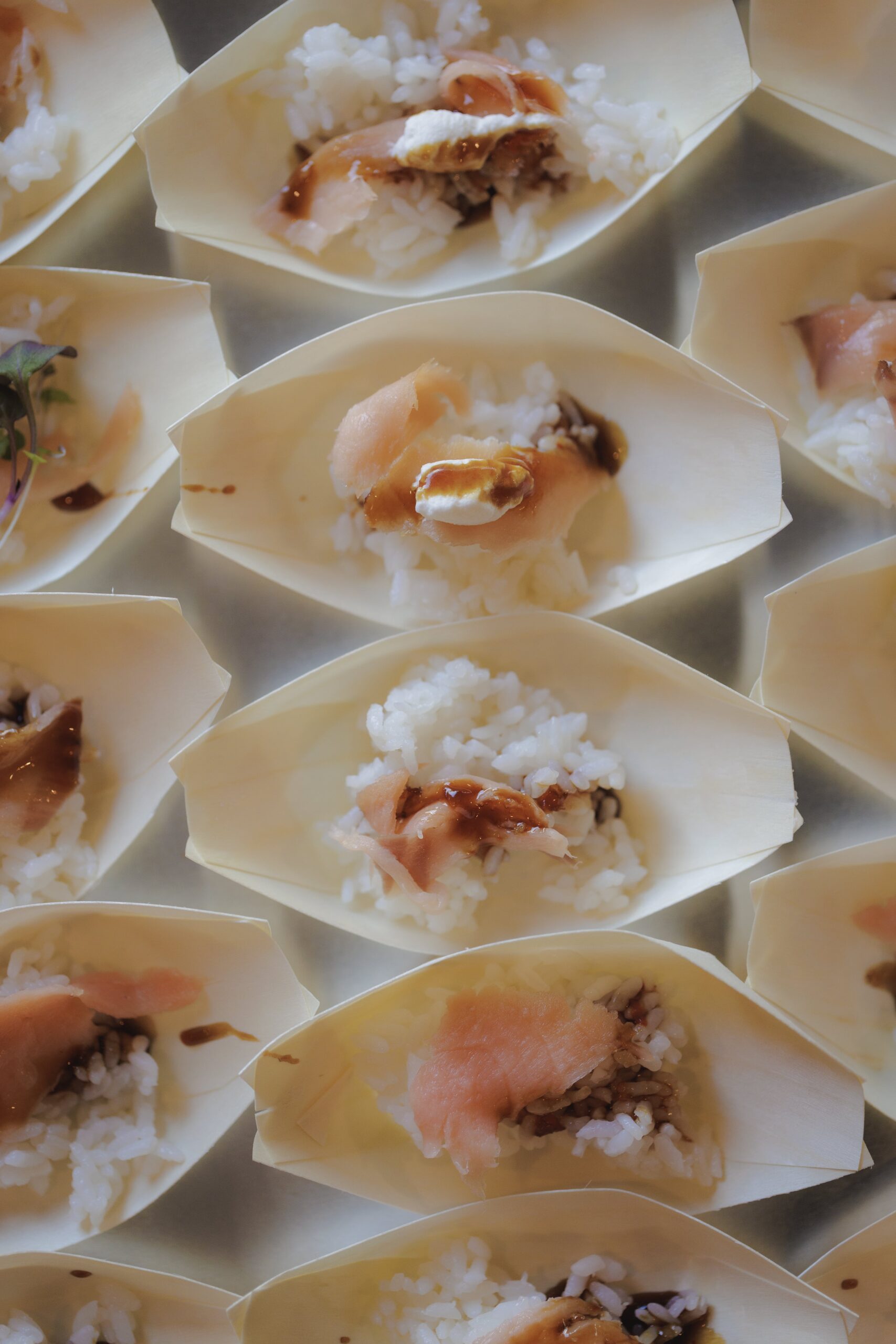
For a formal seated dinner, that may mean a plated menu with composed courses, seasonal ingredients, and gracious pacing between each presentation. For a wedding with a more social energy, chef-attended stations can create movement and conversation while preserving a sense of occasion. Cocktail-style receptions may call for artfully passed hors d’oeuvres and small plates that are easy to enjoy while greeting fellow guests.
There is no universally superior format. Plated service offers ceremony and a focused dining experience, while buffets and stations provide variety and can encourage a more relaxed flow. The right choice depends on the venue, timeline, guest profile, and the kind of interaction the host wants to invite.
A strong menu also makes room for real guest needs without making them feel like an afterthought. Vegetarian, vegan, gluten-conscious, and other preference-based selections should carry the same care, flavor, and visual appeal as every other offering. Thoughtful accommodation is one of the clearest signs of refined hospitality.
Puerto Rican Influence, Presented With Elegance
Puerto Rico offers a culinary vocabulary rich in color, warmth, and history. Used with discernment, local influence gives an event a sense of place that cannot be replicated elsewhere. It may appear through seasonal produce, island seafood, tropical accents, familiar aromas, or a modern interpretation of a beloved tradition.
The goal is not to turn every occasion into a themed menu. A subtle cultural reference can be more memorable than an obvious one. For destination celebrations especially, this approach allows guests to experience the island through food while maintaining the sophistication expected of a luxury event.
Presentation Is Part of the Experience
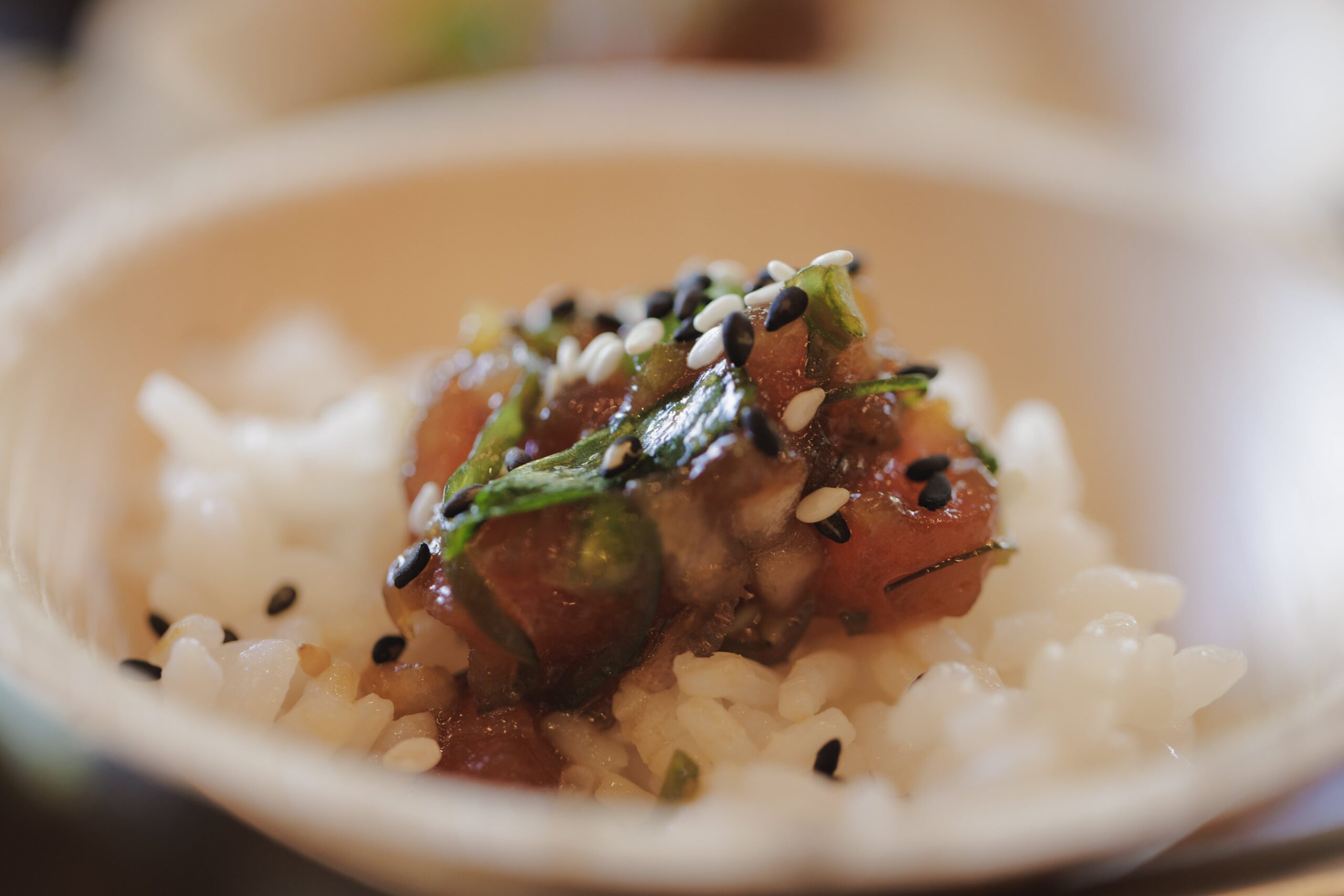
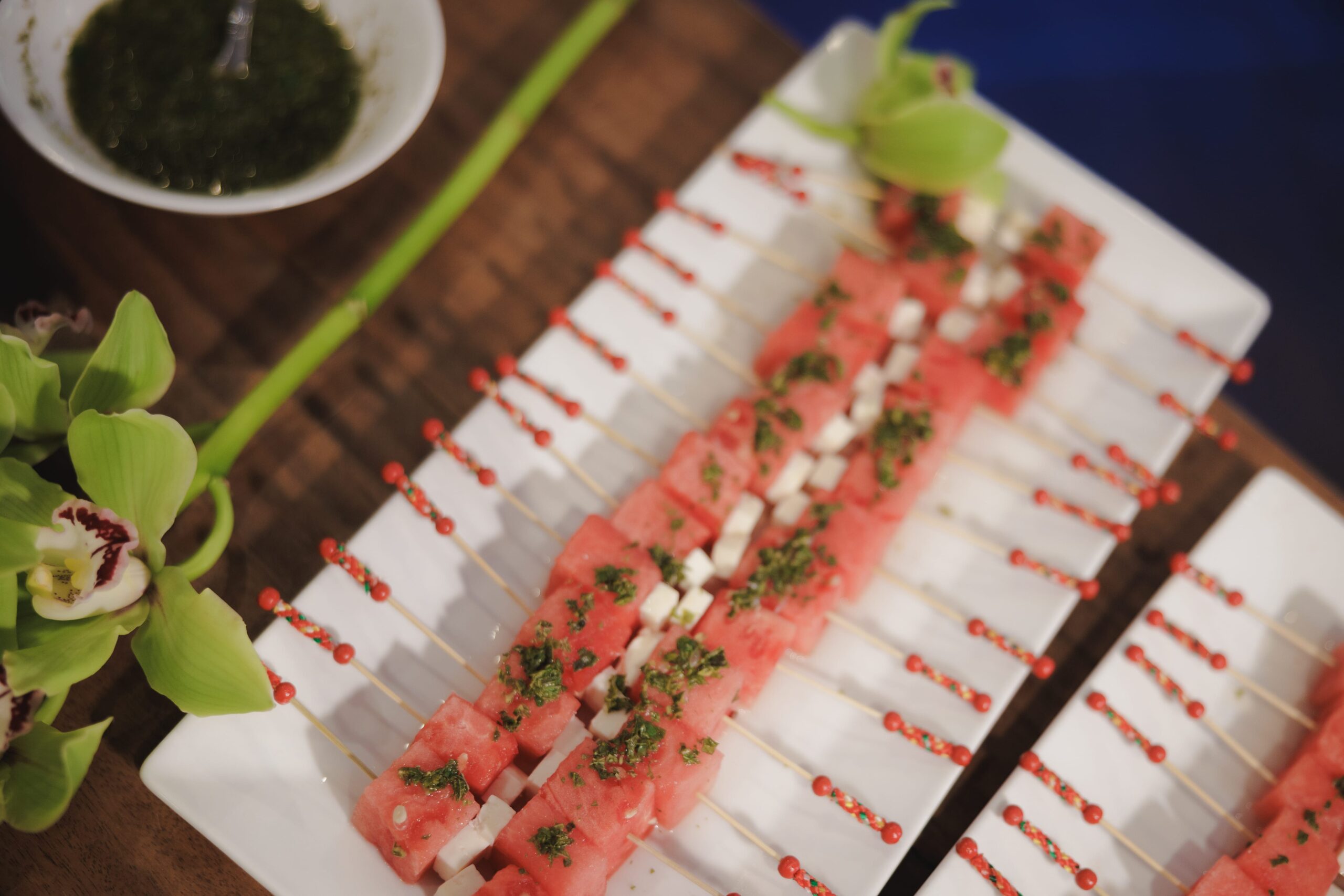
Before guests take their first bite, they begin forming an impression. The color of the garnish, the architecture of a passed canapé, the finish of the glassware, and the way a buffet is styled all speak quietly about the level of care behind the event.
Beautiful presentation should enhance the food rather than distract from it. A plate crowded with decorative elements can feel less refined than one with clean composition and confident restraint. The same is true of food stations. They should feel inviting and abundant, but never cluttered or difficult to navigate.
At an elevated event, visual decisions should also relate to the larger design. Florals, linens, lighting, menu cards, and culinary presentation do not need to match perfectly, but they should belong in the same conversation. When these elements are coordinated, the room feels composed rather than merely decorated.
Service Is Where Luxury Becomes Personal
Exceptional cuisine may bring guests to the table, but gracious service shapes their experience throughout the evening. The strongest service feels attentive without becoming intrusive. Water is refreshed before it is requested. A guest with a dietary restriction is served with confidence and discretion. Transitions happen calmly, allowing the host to remain present with family, friends, or colleagues.
This is particularly valuable for clients who are hosting important people. At a corporate event, leadership should be free to engage with guests rather than manage logistics. At a wedding, the couple should be immersed in the celebration rather than answering questions about timing. For private hosts, the greatest luxury is often the ability to enjoy their own gathering.
Behind that ease is careful preparation. Staffing levels, tray-passing routes, kitchen timing, service etiquette, and communication with planners and venue teams all affect the guest-facing result. What appears effortless is usually the product of experience and precise coordination.
The Venue Changes What Is Possible
Food never exists apart from its setting. A grand ballroom, an oceanfront terrace, a private residence, and a museum hall each ask something different of a menu and service plan. Temperature, access, guest movement, acoustics, and the distance between kitchen and dining area all deserve consideration.
An exclusive setting can also add immediate character to the event. At the Puerto Rico Museum of Art, for example, the art, architecture, and cultural presence of the space create a distinguished foundation for a wedding, reception, or private dinner. The culinary program can then complement that setting rather than compete with it.
Venue prestige alone is not enough, however. The event must still feel personal. The most successful celebrations use an extraordinary location as a backdrop for meaningful hospitality, not as a substitute for it.
How to Choose a Catering Partner With Confidence
When evaluating high end event catering, look beyond photographs of beautiful plates. Ask how the team develops custom menus, manages different service styles, and accommodates guest preferences. Discuss the event timeline and listen for questions that demonstrate genuine interest in your priorities.
Experience matters, particularly when an occasion has many moving parts. A caterer should be able to offer thoughtful guidance without forcing a standard package onto a distinctive celebration. They should explain the trade-offs between formats, help refine ideas, and offer solutions that protect both the guest experience and the host’s vision.
It is also worth considering whether the culinary team and service team share the same standard of hospitality. An exquisite menu can lose its impact when service feels rushed or impersonal. Conversely, polished service becomes even more meaningful when it carries food created with imagination and care.
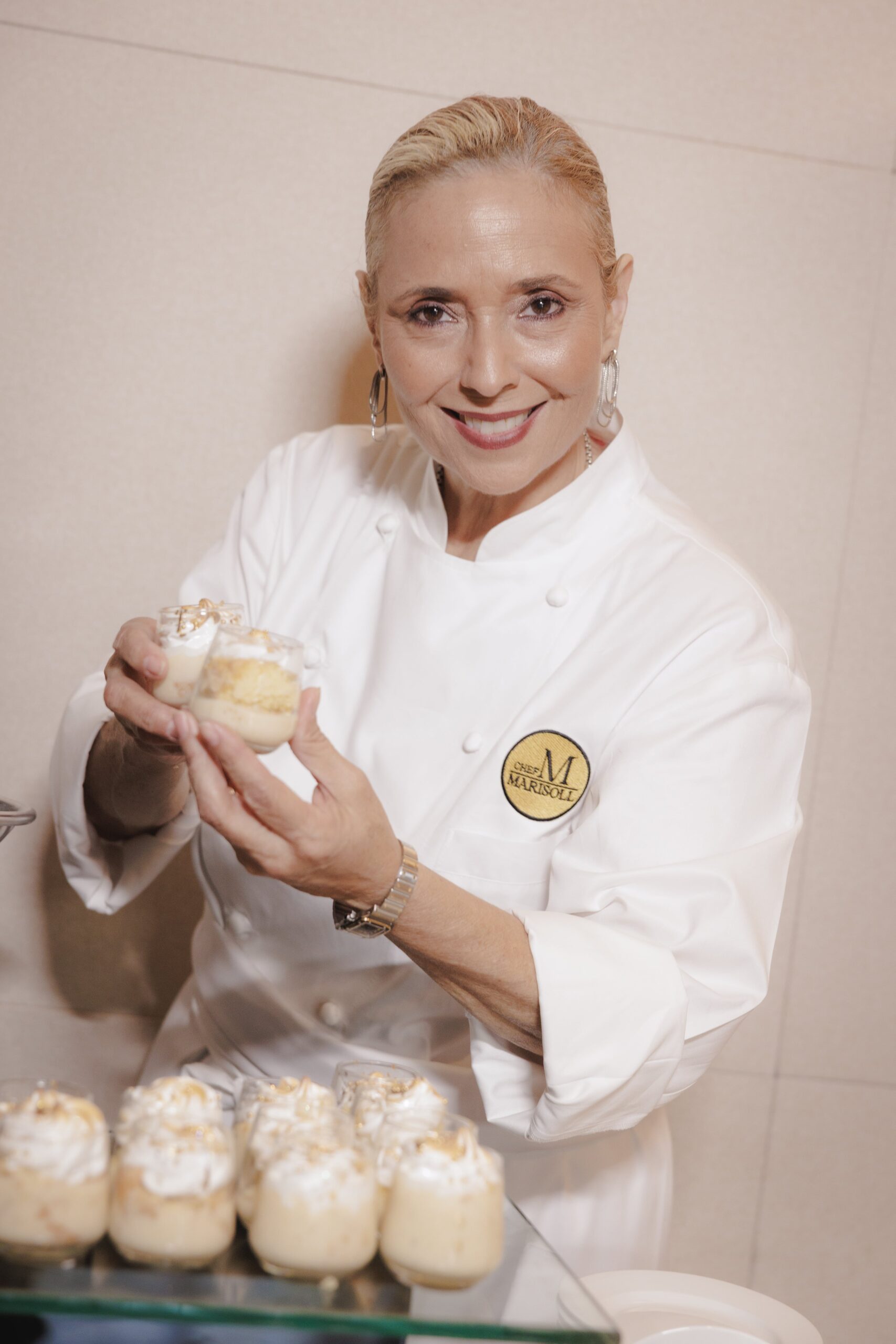
For more than four decades, Chef Marisoll Events has approached celebrations with this complete view of hospitality: crafted menus, elegant presentation, and attentive service designed around the people in the room.
The best place to begin is with the feeling you want guests to carry home. Share that vision clearly, then choose partners who know how to translate it into a table, a menu, and an evening that feels entirely your own.