A destination wedding asks more of a celebration than a beautiful ceremony. Guests arrive ready to experience a place, not simply attend an event. This destination wedding case study illustrates how a thoughtfully designed culinary program can turn a wedding weekend in Puerto Rico into a deeply personal expression of hospitality, culture, and refined celebration.
The scenario is representative of the planning priorities many couples bring to the island: an intimate guest list, a desire for polished service, and a menu that feels unmistakably Puerto Rican without becoming predictable. Their goal was not to recreate a mainland reception in a tropical setting. It was to give every guest a sense of arrival from the first welcome toast to the final late-night bite.
The Vision: Elegance With a Sense of Place
The couple invited 86 guests from New York, Chicago, and California for a three-day celebration in San Juan. They wanted the wedding dinner to feel formal and composed, while still reflecting the warmth and generous spirit that drew them to Puerto Rico. The challenge was balancing high expectations with an experience that felt relaxed rather than overly staged.
They selected an art-filled setting for the reception, where architecture, natural light, and a cultivated atmosphere already offered a strong visual foundation. Instead of competing with the surroundings through excessive décor, the culinary experience was designed to carry much of the evening’s personality. Every course had a purpose: to welcome, to connect guests to the island, and to sustain the rhythm of a long, joyful night.
For destination couples, this decision matters. Floral design and music create immediate impact, but food is the element guests encounter repeatedly. It can either feel like an interruption between meaningful moments or become part of the memory itself.
Designing a Menu Guests Could Feel
The menu began with a simple question: what flavors would make guests feel they had traveled somewhere special? The answer was not to serve only traditional dishes, nor to make every plate an interpretation of local cuisine. The most successful menus have contrast and pacing.
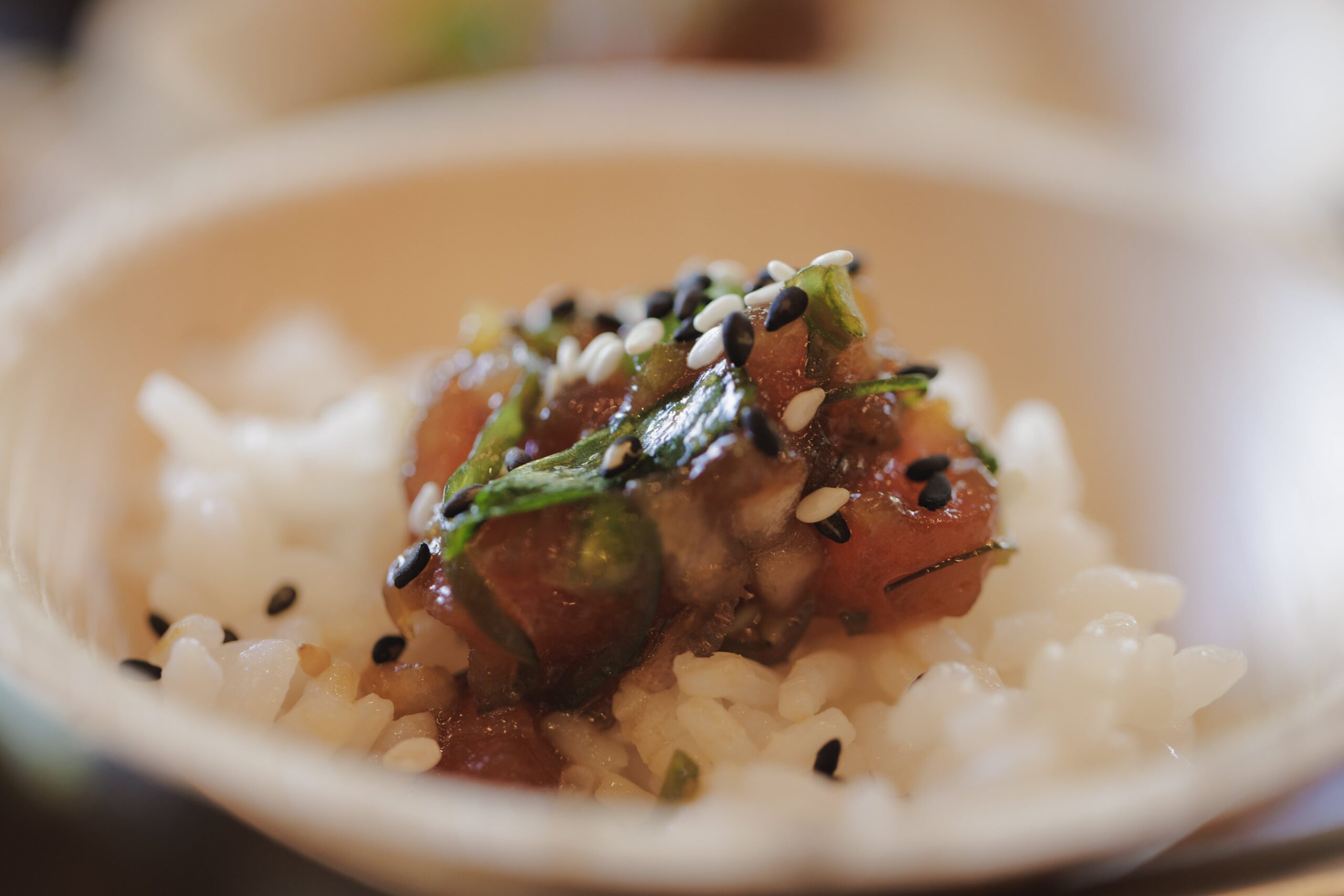
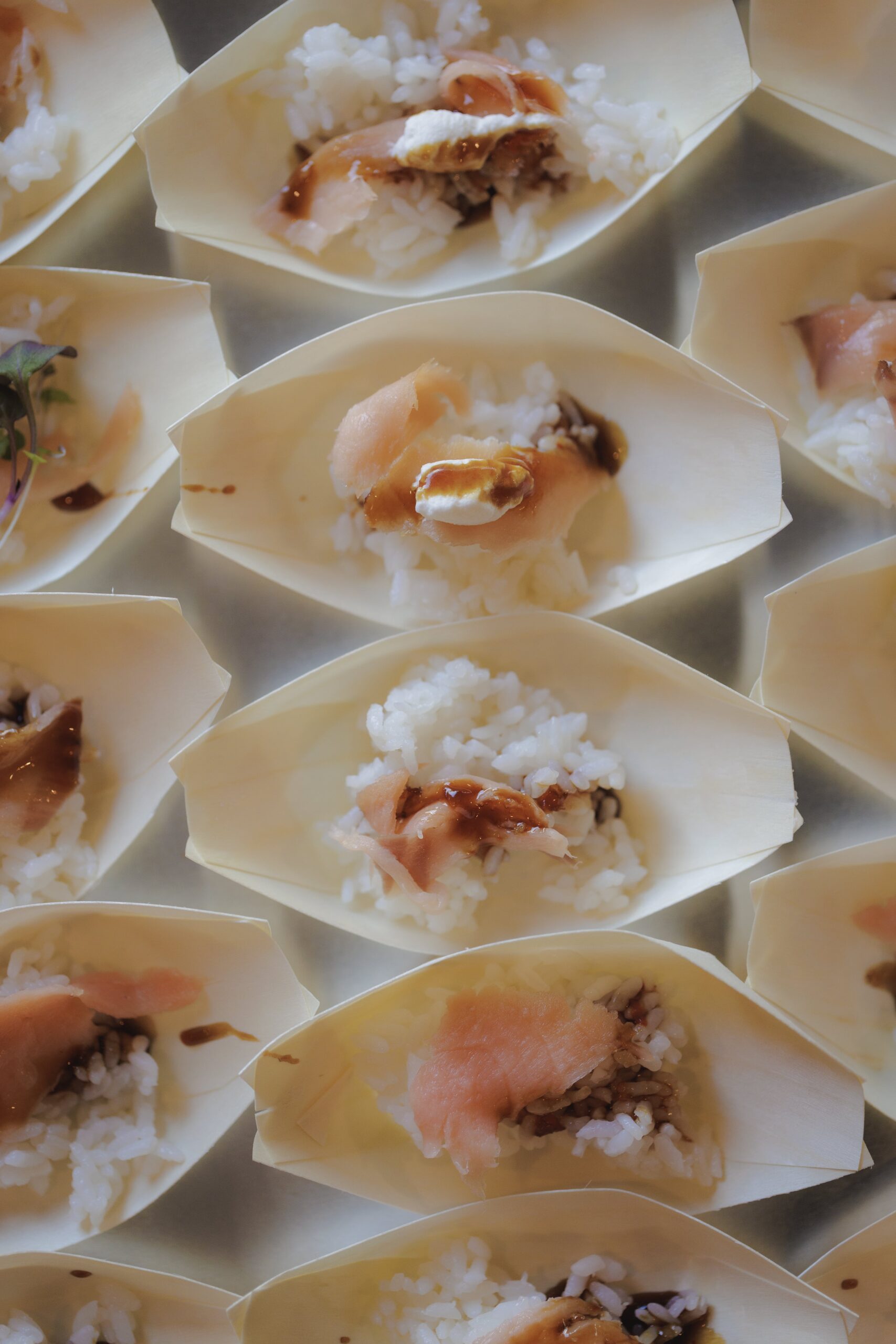
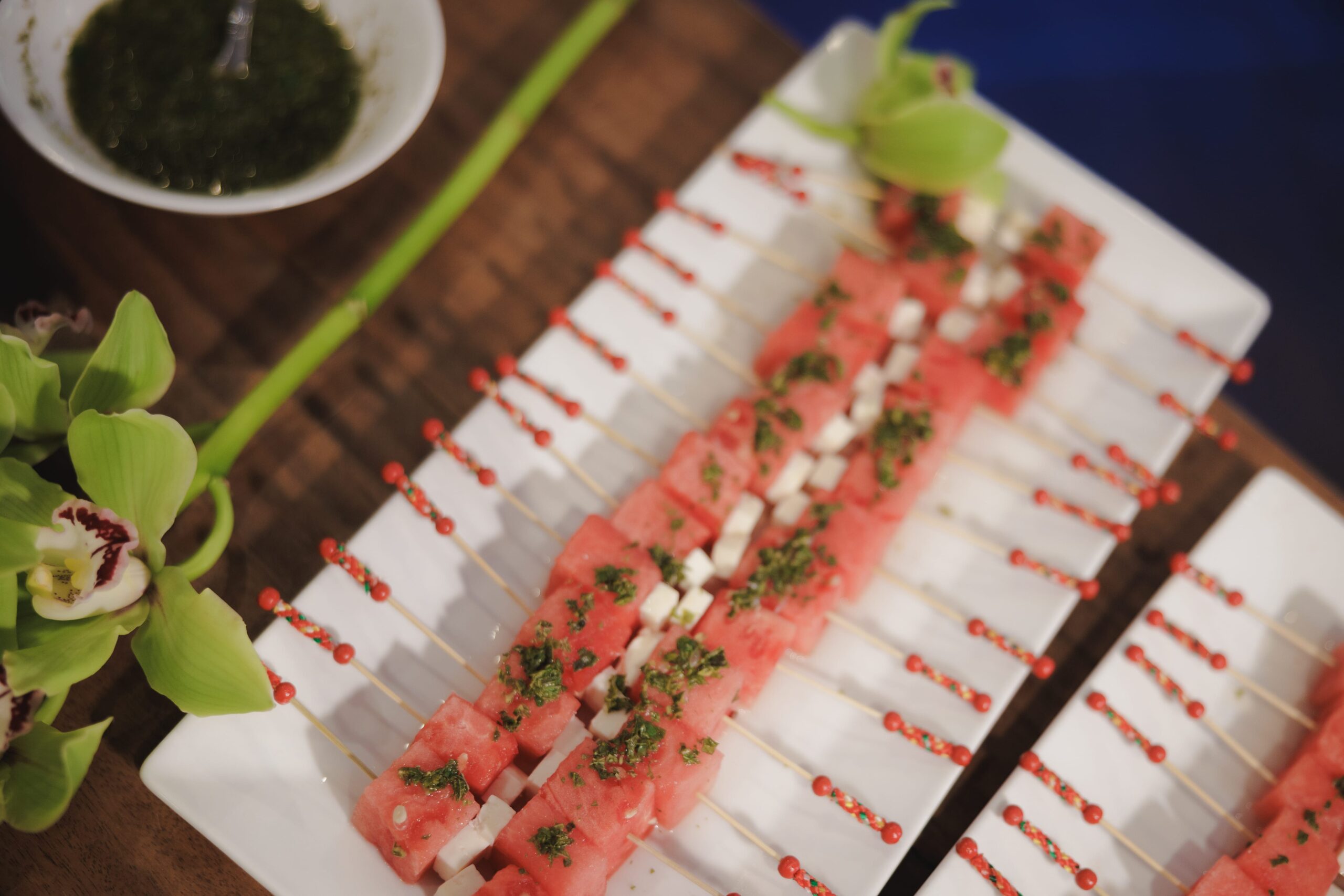
For the cocktail hour, passed hors d’oeuvres paired familiar luxury ingredients with Puerto Rican influence. Fresh seafood, plantain, citrus, and herbs appeared in composed bites that were elegant enough for formal service and approachable enough to spark conversation. A live station added movement to the evening, giving guests a reason to gather and engage before dinner.
At the seated reception, the couple chose a plated menu that placed seasonal ingredients and refined presentation at the center. The first course was bright and fresh, offering relief from the island warmth. The main course provided a choice between carefully prepared seafood and a tender meat entrée, with vegetarian accommodations planned as complete dishes rather than afterthoughts.
Dessert carried a more playful note. Rather than a single standard offering, it incorporated tropical fruit, delicate pastry, and coffee service that invited guests to remain at the table a little longer. This is a small detail with a meaningful effect: when dessert feels intentional, dinner does not end abruptly. It transitions naturally into dancing and celebration.
Why Personalization Was More Than a Preference
The couple had guests with dietary restrictions, varied cultural expectations, and different levels of comfort with unfamiliar flavors. Custom menu planning prevented those considerations from becoming complications on the wedding day.
A well-designed destination menu gives guests options without looking fragmented. It considers vegetarian, gluten-sensitive, and allergy-aware needs early, then presents each dish with the same care as every other selection. The result is gracious hospitality. No guest is left wondering whether there will be something for them, and no couple has to spend the evening managing details that should already be handled.
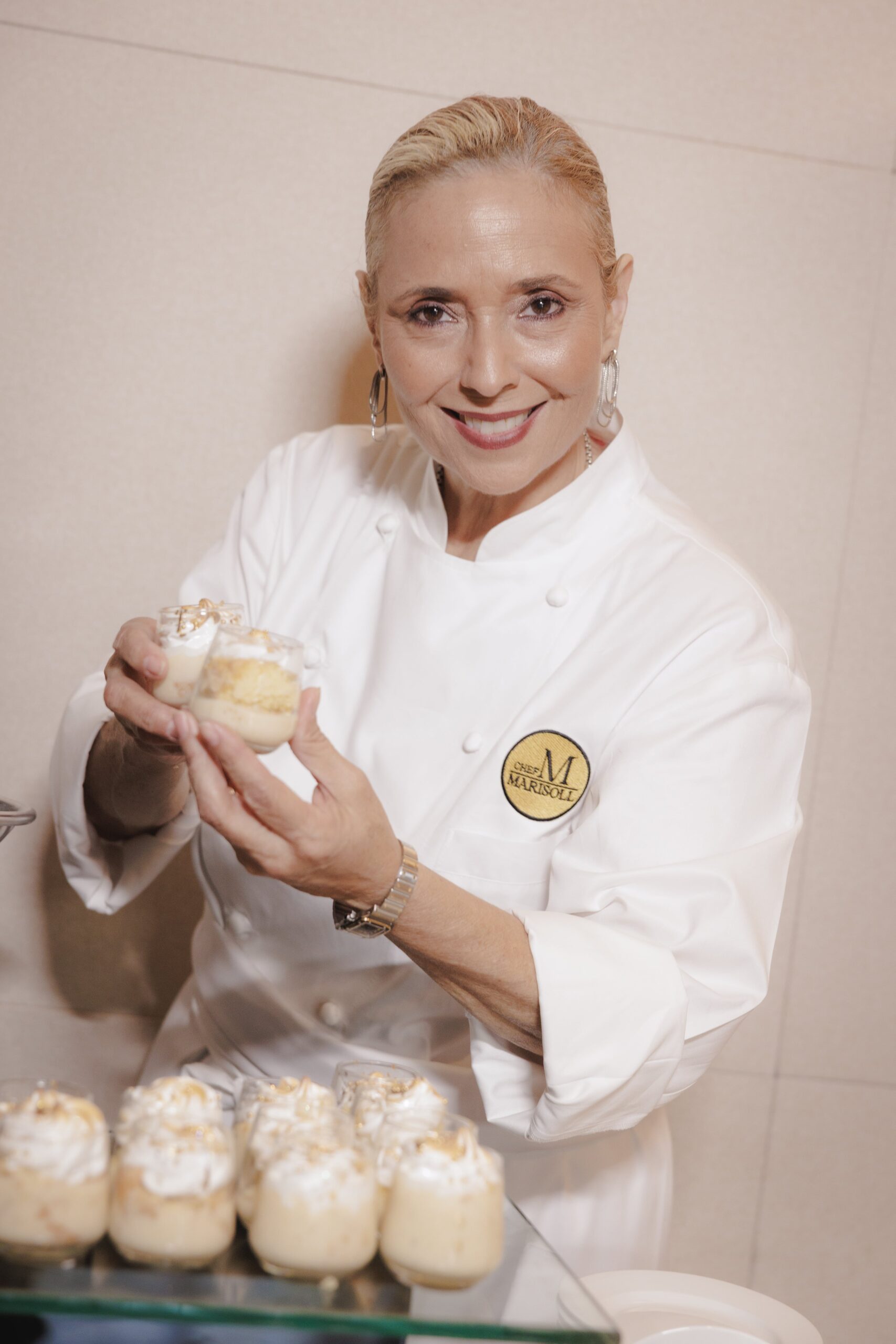
Chef Marisoll Events approaches this level of planning as part of the culinary artistry itself. A menu becomes more memorable when it honors the hosts’ style and makes every guest feel considered.
Service That Protected the Flow of the Evening
In a destination wedding, timing can be particularly delicate. Guests may be adjusting to travel, weather, and a setting that is new to them. The reception schedule needs enough structure to feel polished, with enough flexibility to preserve an effortless mood.
For this celebration, service was planned around the energy of the room. Cocktail hour began before sunset, allowing guests to enjoy the light and the setting while photographers captured the couple’s first moments with family and friends. Passed service continued at a measured pace, so guests had food in hand without feeling full before dinner.
Once guests were seated, the dinner service was coordinated with speeches and musical transitions. Plates arrived quietly and consistently, allowing the couple’s welcome, toasts, and family moments to remain the focus. The service team anticipated needs without drawing attention to itself, from refreshing water in the warm evening air to guiding guests with dietary requirements to the right selections.
This is where premium catering earns its place in the overall event design. A beautiful plate matters, but the experience depends on how confidently it reaches the table. One delayed course or poorly timed station can alter the atmosphere of the reception. Attentive service keeps the event feeling composed, even when the evening is lively.
The Puerto Rican Details That Made It Distinctive
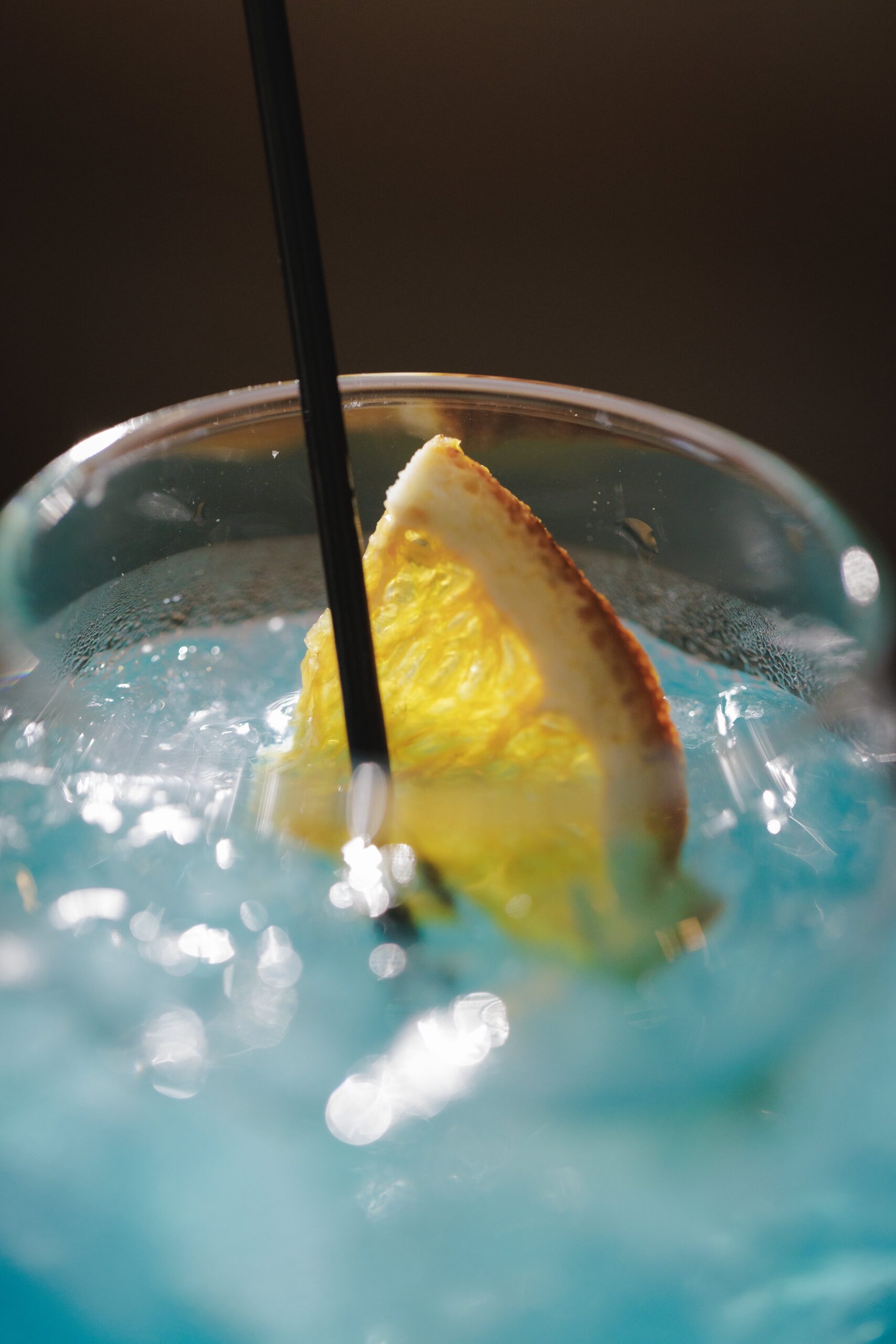
The most compelling destination events do not rely on obvious symbols. They reveal their setting through thoughtful layers. Here, Puerto Rico was present in the menu’s ingredients, the welcome drink, the warmth of the service, and the relaxed elegance of the evening’s pace.
The couple also created a late-night moment that felt especially true to their guests and their chosen destination. After hours of dancing, a selection of elevated comfort foods appeared in a format that was easy to enjoy without leaving the celebration. It was familiar, festive, and beautifully presented – proof that luxury does not always mean formality.
This choice also answered a practical need. Guests who had traveled all day or spent the afternoon in the sun appreciated a final offering that restored their energy. The best late-night service feels generous, never excessive. It recognizes that a wedding is both an occasion and an act of care.
What This Destination Wedding Case Study Reveals
A destination wedding menu should not be planned in isolation. It works best when it supports the setting, schedule, guest profile, and emotional tone of the weekend. A multi-course plated dinner may be ideal for a black-tie reception, while food stations can create a more social, exploratory experience for a garden celebration or a larger guest count.
There are trade-offs. Plated service creates a graceful, structured rhythm but requires earlier guest selections and a disciplined timeline. Stations invite more movement and variety, but they need careful placement and staffing to avoid lines. A strong caterer helps couples make these choices based on the experience they want guests to have, not simply on a trend or a menu format.
The strongest outcome in this case was not one particular dish. It was the sense that the wedding could only have happened in Puerto Rico. Guests enjoyed a celebration that felt elevated without feeling distant, personal without feeling overly casual, and distinctly connected to the island.
When planning a destination wedding, begin with the feeling you want guests to carry home. A beautifully tailored meal, presented with genuine warmth and flawless care, can become the detail they remember long after the final song.