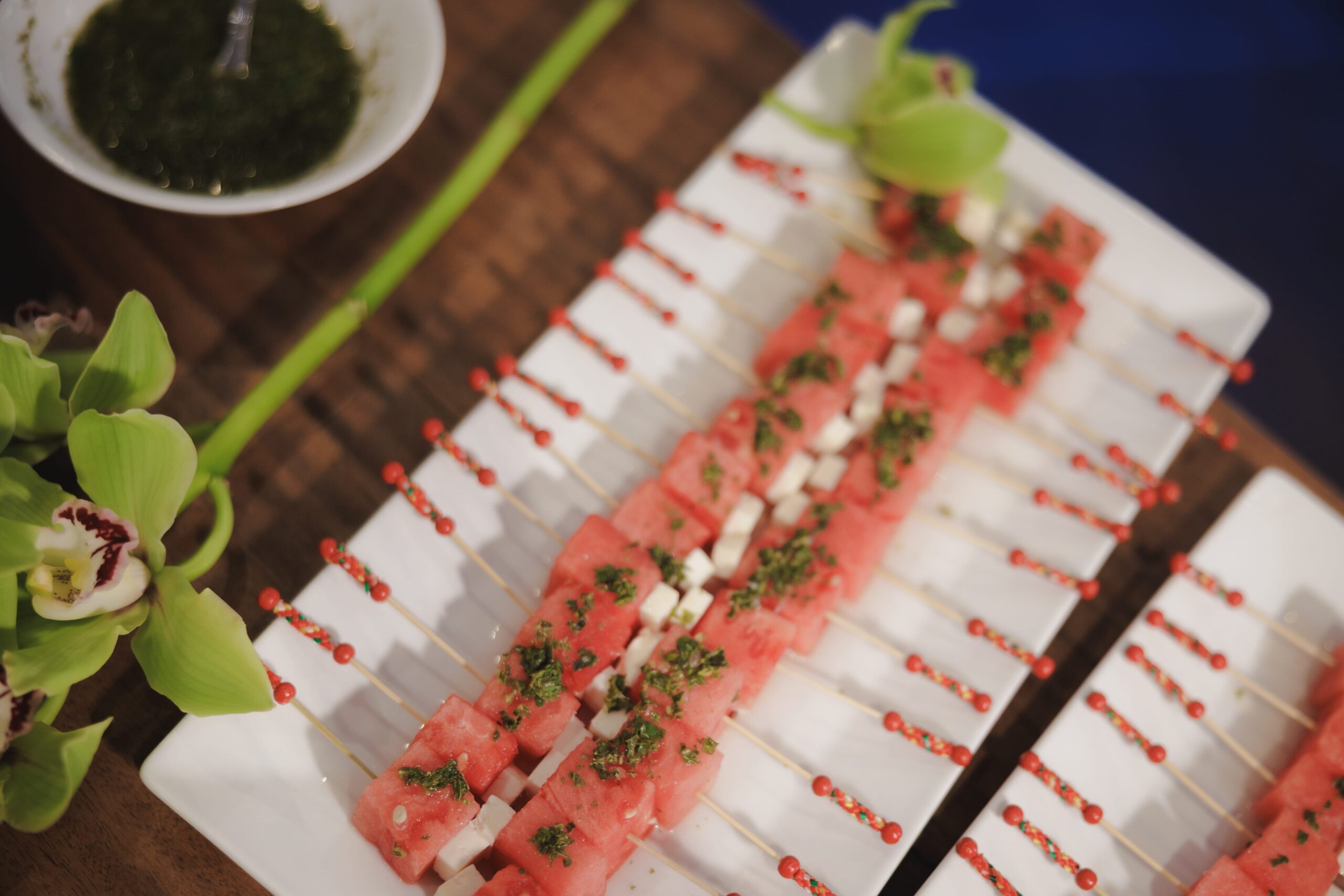
A destination celebration in Puerto Rico has a way of making every decision feel more meaningful: the arrival cocktail beneath palm trees, the first dinner course shared with family who traveled far, the final toast against a warm Caribbean evening. Knowing how to budget destination catering means protecting those moments without allowing the details behind them to become a source of uncertainty.
For a wedding, executive retreat, or private milestone event, catering is not simply a line item for food. It is the menu, the service team, the presentation, the timing, and the hospitality your guests will remember. A thoughtful budget creates room for all of it.
Begin With the Experience You Want to Create
Before requesting proposals, define the feeling your event should leave with guests. An intimate celebration may call for a refined plated dinner and attentive wine service. A larger welcome party may be better served by chef-attended stations, passed hors d’oeuvres, and a lively bar moment that encourages conversation.
This choice shapes far more than the menu. A plated dinner often requires more staff, rentals, place settings, and a carefully paced service plan. Stations can offer greater variety and an engaging visual element, while a buffet may be a fitting choice for a relaxed gathering with a larger guest count. None is inherently better. The right format is the one that supports your guest experience, venue, and priorities.
Start by identifying the elements you value most. Perhaps it is a memorable cocktail hour, exceptional local ingredients, a beautifully styled dessert display, or the calm confidence of full-service coordination. When priorities are clear, it becomes easier to invest with intention rather than trying to add every possible enhancement.
Set a Realistic Destination Catering Budget
A useful starting point is to separate your catering investment into two categories: the culinary experience and the operational requirements that bring it to life. The first includes food, beverages, menu development, and presentation. The second includes service staff, equipment, rentals, transportation, setup, breakdown, and venue-specific needs.
Many hosts focus first on the per-person menu price. That figure matters, but it is only part of the full picture. A more realistic question is: what will it take to serve this menu beautifully, safely, and on time in this particular location?
For destination events, build in a contingency of approximately 10 to 15 percent. This reserve can accommodate a final guest-count adjustment, added dietary accommodations, a weather-related layout change, or a detail that becomes important once you are on island. It is not a sign that planning is uncertain. It is a practical way to preserve flexibility without compromising quality at the last moment.
Use Your Guest Count Carefully
Your guaranteed guest count is one of the most influential numbers in your catering proposal. Food quantities, staffing levels, rentals, and bar inventory all respond to it. Begin planning with the most credible estimate available, then ask your caterer when final numbers are due and what level of adjustment remains possible afterward.
A smaller guest list does not automatically mean a lower-touch event. In fact, intimate dinners often invite more personalized menu design, elevated tableside details, and premium ingredients. A larger celebration may offer efficiencies in some areas, but it also requires greater production, staffing, and logistical coordination. Budget according to the experience, not simply the headcount.
Account for the Costs Beyond the Menu
The most polished events feel effortless because the less visible details have been planned with care. When learning how to budget destination catering, make room for the elements guests may never see but will absolutely feel.
Consider whether your venue has a working kitchen, adequate refrigeration, accessible loading areas, electricity, and weather protection. A historic property, private villa, beach setting, or museum venue may have distinct operational needs. Equipment may need to be brought in, service paths may require additional planning, and outdoor events may call for tents, fans, lighting, or a backup configuration.
Staffing deserves the same attention. A high-touch reception with passed bites, specialty cocktails, and plated dinner service needs a different team than a casual luncheon. Experienced captains, servers, bartenders, culinary staff, and setup crews create the gracious rhythm that allows hosts to remain present with their guests.
Also confirm whether your proposal includes items such as china, glassware, flatware, linens, tables, chairs, bar furniture, décor, cake cutting, late-night service, and cleanup. These details vary by venue and event design. Reviewing them early prevents a beautiful menu from being paired with an incomplete service plan.
Let the Menu Reflect Puerto Rico Thoughtfully
Destination dining is most memorable when it feels connected to place. Puerto Rico offers extraordinary inspiration: bright tropical fruit, fresh seafood, fragrant herbs, plantains, coffee, rum, and culinary traditions that carry warmth and character. A menu with a sense of place can feel distinctive without becoming overly literal.
This does not mean every course must follow one style. A sophisticated menu may pair Puerto Rican influences with classic techniques, seasonal ingredients, and your own preferences. The goal is a meal that feels personal to you and meaningful to guests who have traveled to celebrate.
Seasonality can also help guide spending. When ingredients are at their peak and locally available, they often deliver stronger flavor and a more natural connection to the island. If a particular imported ingredient is essential to your vision, include it deliberately, but ask where a seasonal alternative could create an equally elegant result. This is thoughtful editing, not a compromise in standards.
Plan for Dietary Needs From the Start
Dietary accommodations are part of modern hospitality, especially when guests are arriving from different places and bringing varied preferences. Ask invited guests for allergies and dietary restrictions early enough for your culinary team to plan confidently.
A well-designed menu can include vegetarian, vegan, gluten-conscious, and allergy-aware options without making certain guests feel like an afterthought. The cost impact depends on the number and complexity of accommodations, but early information is almost always easier to manage than late changes. It also supports a more composed service experience on the day itself.
Decide Where to Elevate and Where to Simplify
An elegant event does not require extravagance in every moment. It requires a point of view. Choose two or three areas where you want guests to feel the greatest sense of occasion, then allow the rest of the plan to support those choices.
For some couples, that may be an abundant cocktail hour followed by a streamlined three-course dinner. For a corporate gathering, it may be a polished arrival reception and chef-led food stations that make networking feel natural. For a private dinner, it may be exceptional wine pairings and a beautifully paced seated meal rather than an elaborate late-night spread.
Beverages are a common area for thoughtful decisions. A full premium bar, curated wine service, signature cocktails, champagne toast, and nonalcoholic pairings each create a different guest experience and budget. Rather than selecting every option, decide what best reflects the celebration. One beautifully crafted signature cocktail inspired by Puerto Rico can be more memorable than an extensive bar program that does not feel considered.
Ask for a Clear, Comparable Proposal
A detailed proposal is one of the most valuable planning tools you can have. It should make it easy to understand what is included, what is estimated, and which items may change as final details are confirmed. When comparing catering partners, look beyond the headline price.
Ask how the menu will be customized, who will lead service on the event day, how the team handles venue logistics, and what is included in setup and breakdown. Clarify service charges, taxes, travel or transportation considerations, rentals, minimums, and payment milestones. A lower initial figure may not represent the stronger value if essential services are added later.
Chef Marisoll Events approaches each celebration as a complete hospitality experience, pairing crafted menus with refined presentation and the attentive execution that destination hosts need. The most productive conversations begin with your vision, guest count, venue, and investment range, then build a plan around what matters most.
Build in Time for Final Refinement
Destination events involve moving pieces, and the strongest plans allow space for thoughtful refinement. Review your catering plan again after the venue walk-through, when the guest count is close to final, and when your event timeline is taking shape. Those moments often reveal practical opportunities to improve flow, adjust service, or focus the budget on an element that will have greater impact.
The goal is not to control every detail from the beginning. It is to establish a clear financial framework, choose a culinary partner you trust, and make decisions that honor the people gathering around your table. When the service feels gracious and the meal feels distinctly yours, the investment becomes part of the memory rather than a number you spent the evening worrying about.